Protein Expression Services
An open in vitro reaction driven by DNA or mRNA templates yields target protein within hours — purified samples in as little as 5 days.
An open in vitro system that rapidly synthesises toxic or otherwise hard-to-express proteins, with non-natural amino acids or labels added as needed.
The cell-free platform is an open in vitro system based on cell lysate: synthesis is fast, unusual expression requirements are manageable, non-natural amino acids can be incorporated and the expression mode stays flexible and controllable.
Enquire now →

Synthesis takes only hours and sequence-to-purified-sample can finish in as little as 5 days, greatly accelerating development.
Success rates rise markedly for toxic proteins, membrane proteins, long constructs and other targets that living cells struggle with.
The controlled in vitro environment folds product correctly, with activity comparable to mammalian expression and stable batch-to-batch consistency.
Tag removal, biotin labelling and buffer exchange are supported for a range of downstream applications.

Four stages, with gene synthesis and vector construction both optional — an existing template goes straight to synthesis; outputs and acceptance criteria are in the specifications below.
Codon optimisation and full gene synthesis, cloned into a high-efficiency cell-free vector (both optional)
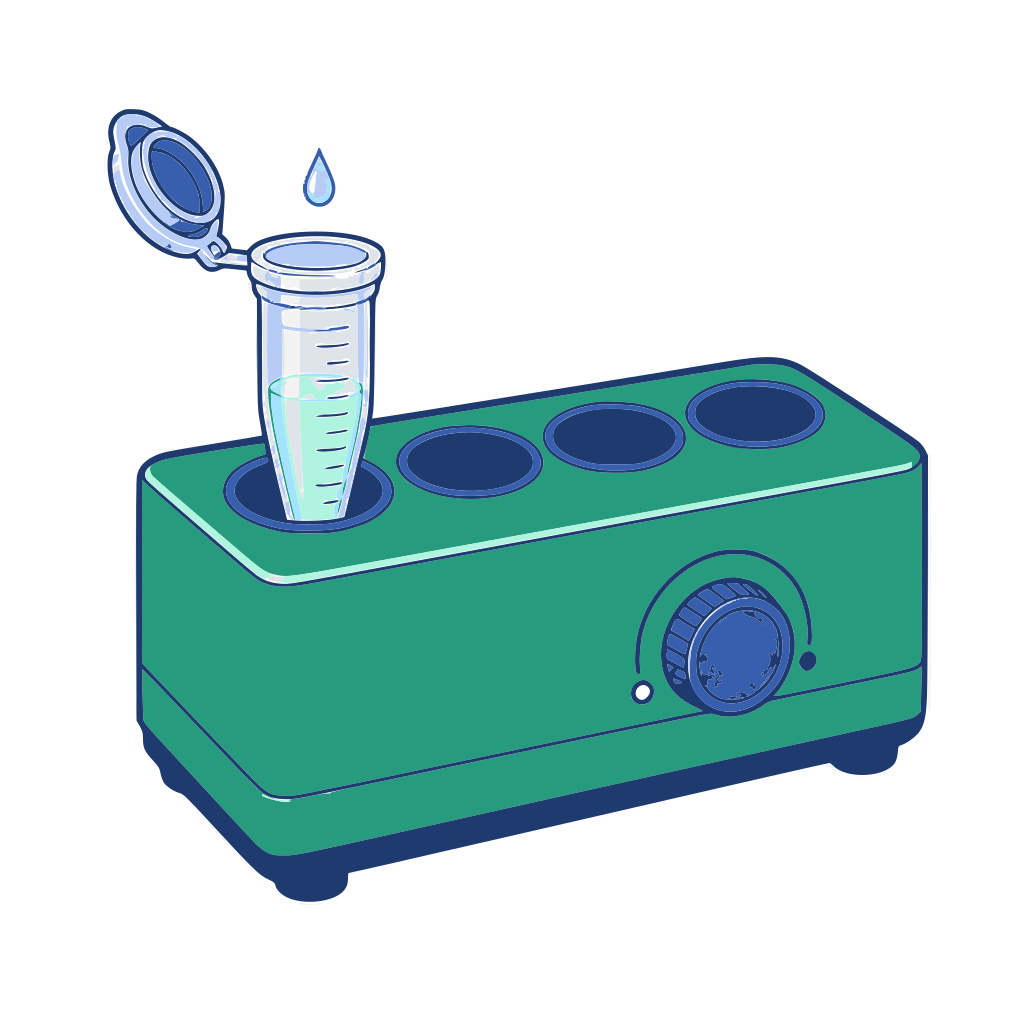
An open in vitro reaction from DNA or mRNA template completes within hours
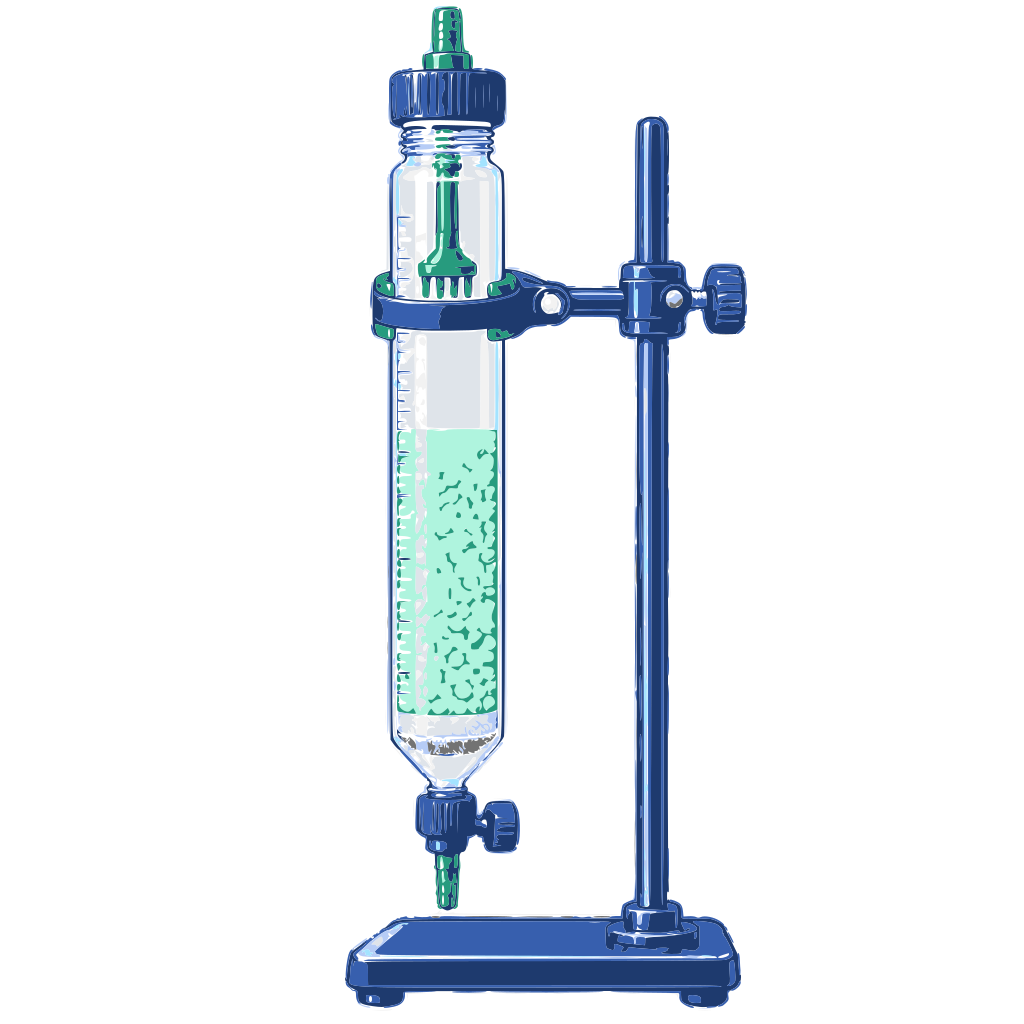
Product capture and affinity purification, with SDS-PAGE, UV and SEC-HPLC QC
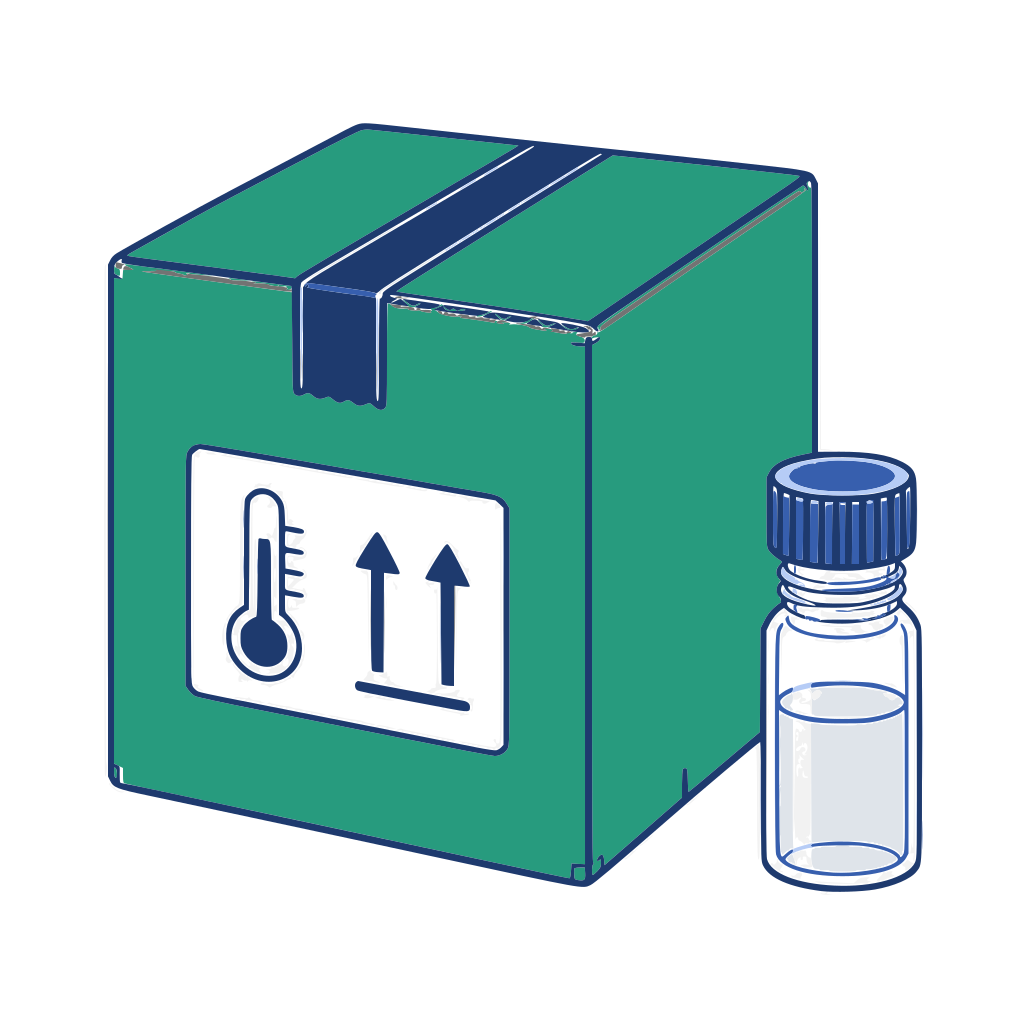
0.2–1.5 mg purified protein delivered with the feasibility and quality reports (CoA)
Gene synthesis takes 2–6 days (optional), vector construction 2 days (optional) and synthesis with purification and feasibility validation 1–2 days. Protein synthesis itself takes only hours — sequence to purified sample in as little as 5 days.
Two systems — prokaryotic (E. coli extract) and eukaryotic (rabbit reticulocyte lysate, wheat germ extract). The prokaryotic route favours yield and speed; the eukaryotic route assists disulfide formation and chaperone-mediated folding. Together they address toxic, rapidly degraded, membrane and complex disulfide-bonded proteins, and suit multi-subunit assembly and rapid variant screening.
Deliverables, acceptance criteria and timelines by experimental stage. The staging differs from the process above: the process shows how a project runs, while this table is the acceptance basis written into the contract.
| Stage | Scope | Deliverables | Standards | Timeline |
|---|---|---|---|---|
| Gene synthesis & codon optimisation (optional) | Codon optimisation of your sequence followed by full gene synthesis | Sequencing report | Sequence accuracy assured as the basis for efficient expression. | 2-6 days |
| Vector construction & plasmid prep (optional) | The gene is cloned into a high-efficiency cell-free expression vector, sequence-verified and prepared in quantity | Sequence alignment report and high-purity expression plasmid | Vector matched to the cell-free system for high expression efficiency. | 2 days |
| Synthesis, purification & feasibility | Cell-free synthesis reaction, product capture and affinity purification, QC testing (SDS-PAGE, UV, SEC-HPLC, etc.) | 0.2–1.5 mg purified protein sample with feasibility and quality reports (CoA) | This stage confirms successful expression and delivers the first sample for initial validation. | 1-2 days |
Share the intended application and what you already have in hand. A scientist — not a sales rep — will scope feasibility, suggest the right route and send a quote, usually within one business day.