SanjingBio has built a pipeline of 114 nanobody targets across oncology, autoimmune and metabolic disease, spanning seven standard stages from antigen preparation to BLI affinity; other functional validations are shown separately for each target. Browse every target and its progress — all are open to licensing or co-development.
Each target advances along a standard path from antigen preparation to BLI affinity, with progress reflecting the last completed stage. Other functional validations such as internalization/blocking, humanization and stability are shown separately for each target, with data retained at every key node. Targets at antibody expression or beyond carry evaluable molecules and verifiable characterization data, available for licensing or co-development.
| Catalog No. | Target | Antigen Prep | Immunization | Screening | Expression | ELISA | FACS | BLI | Other functional validation |
|---|---|---|---|---|---|---|---|---|---|
| SJ0301 | FRα | Progress: completed through ⑦BLI affinity (stage 7/7 ) | ①Internalization/blocking, ②Humanization, ③Stability | ||||||
| SJ0501 | CDH17 | Progress: completed through ⑦BLI affinity (stage 7/7 ) | ①Internalization/blocking, ②Humanization, ③Stability | ||||||
| SJ0801 | MSLN | Progress: completed through ⑦BLI affinity (stage 7/7 ) | ①Internalization/blocking, ②Humanization, ③Stability | ||||||
| SJ1001 | PTK7 | Progress: completed through ⑦BLI affinity (stage 7/7 ) | ①Internalization/blocking | ||||||
| SJ1901 | MET | Progress: completed through ⑦BLI affinity (stage 7/7 ) | ①Internalization/blocking | ||||||
| SJ0601 | CEACAM5 | Progress: completed through ⑦BLI affinity (stage 7/7 ) | ①Internalization/blocking | ||||||
| SJ0701 | CEACAM6 | Progress: completed through ⑦BLI affinity (stage 7/7 ) | — | ||||||
| SJ1101 | 5T4 | Progress: completed through ⑦BLI affinity (stage 7/7 ) | — | ||||||
| SJ1301 | B7H3 | Progress: completed through ⑥FACS (stage 6/7 ) | — | ||||||
| SJ1401 | HER2 | Progress: completed through ⑥FACS (stage 6/7 ) | — | ||||||
| SJ1201 | GUCY2C | Progress: completed through ⑥FACS (stage 6/7 ) | — | ||||||
| SJ2401 | BCMA | Progress: completed through ⑦BLI affinity (stage 7/7 ) | — | ||||||
| SJ3201 | CD79B | Progress: completed through ⑥FACS (stage 6/7 ) | — | ||||||
| SJ3301 | FAP | Progress: completed through ⑥FACS (stage 6/7 ) | — | ||||||
| SJ3501 | LGR5 | Progress: completed through ⑥FACS (stage 6/7 ) | — | ||||||
| SJ4201 | Nectin4 | Progress: completed through ⑥FACS (stage 6/7 ) | — | ||||||
| SJ5401 | CLDN1 | Progress: completed through ⑥FACS (stage 6/7 ) | — | ||||||
| SJ6701 | SEZ6 | Progress: completed through ④Antibody expression (stage 4/7 ) | — | ||||||
| SJ7101 | GPC3 | Progress: completed through ④Antibody expression (stage 4/7 ) | — | ||||||
| SJ2301 | CD7 | Progress: completed through ⑦BLI affinity (stage 7/7 ) | — | ||||||
| SJ3001 | PD1 | Progress: completed through ④Antibody expression (stage 4/7 ) | — | ||||||
Three services form a progressive evaluation chain: functional activity confirmed at the cellular level, in vivo efficacy validated in tumour-bearing models, and developability established through structural and purity characterisation.
Precise, reliable in vitro efficacy testing is the cornerstone of candidate screening and optimisation. Guided by each target's mechanism of action, SanjingBio rapidly and accurately assesses antibody function at the cellular level, giving programmes an early basis for decisions.
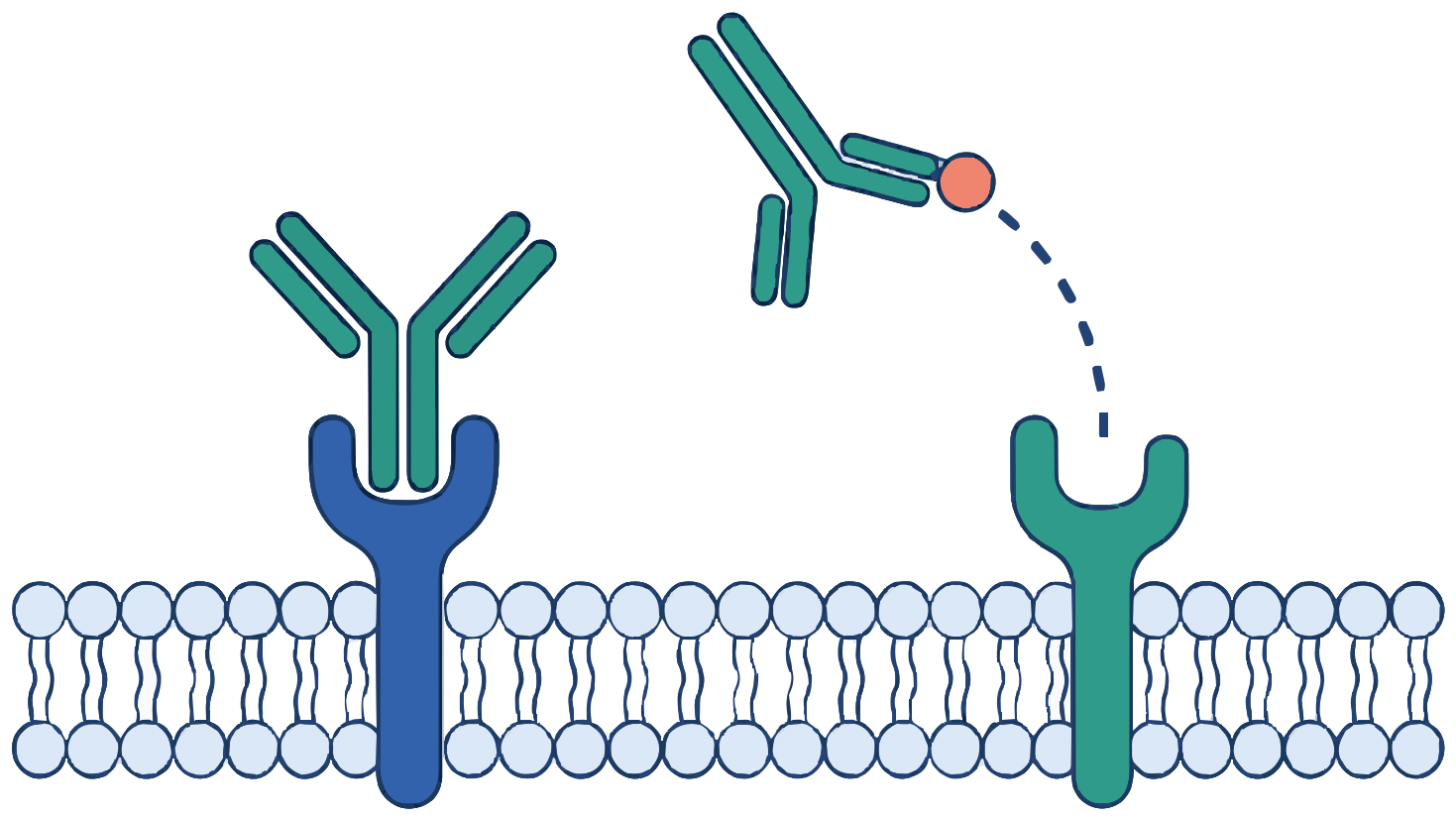
Binding & competition assays
Flow cytometry binding assays, competitive inhibition assays and more
Signalling pathway modulation
Reporter gene systems (e.g. luciferase) and phosphorylation readouts (e.g. p-ERK, p-AKT)
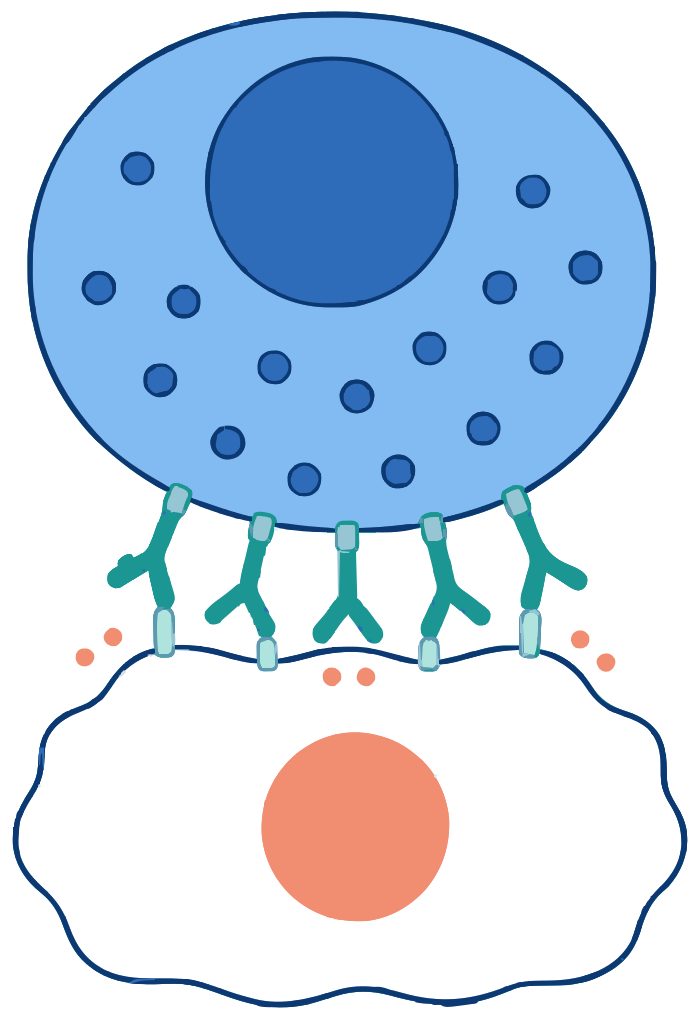
Immune cell function
ADCC, CDC, T-cell/immune-cell activation and proliferation, cytokine release
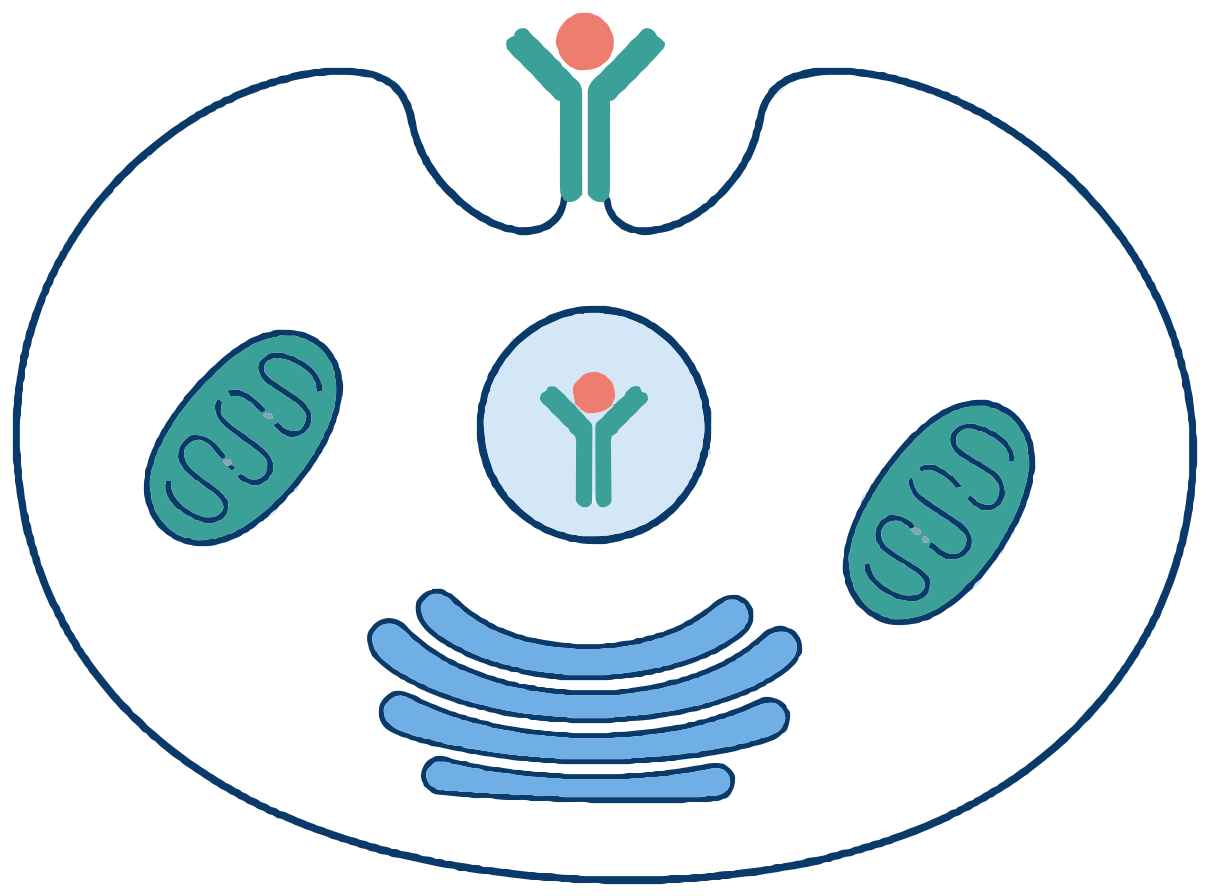
Antibody internalisation & degradation
pH-sensitive fluorescent dyes tracking internalisation of antibody–antigen complexes
Direct killing & growth inhibition
Tumour-cell killing (Incucyte), proliferation inhibition (CCK-8)
Additional functional assays
Enzyme-inhibition assays, cell chemotaxis assays and more
Mechanism-based scientific design
Efficacy models are built and validated strictly from target biology, keeping every evaluation on solid ground.
Standardised, rigorous workflow
Validated SOPs and quality control throughout keep data accurate and reproducible.
Highly flexible custom design
Not bound to fixed models — assays are combined flexibly around each target's mechanism.
A deeply collaborative partnership
Close collaboration from study design through results analysis.

Define target background and programme goals; deliver the technical route and study plan
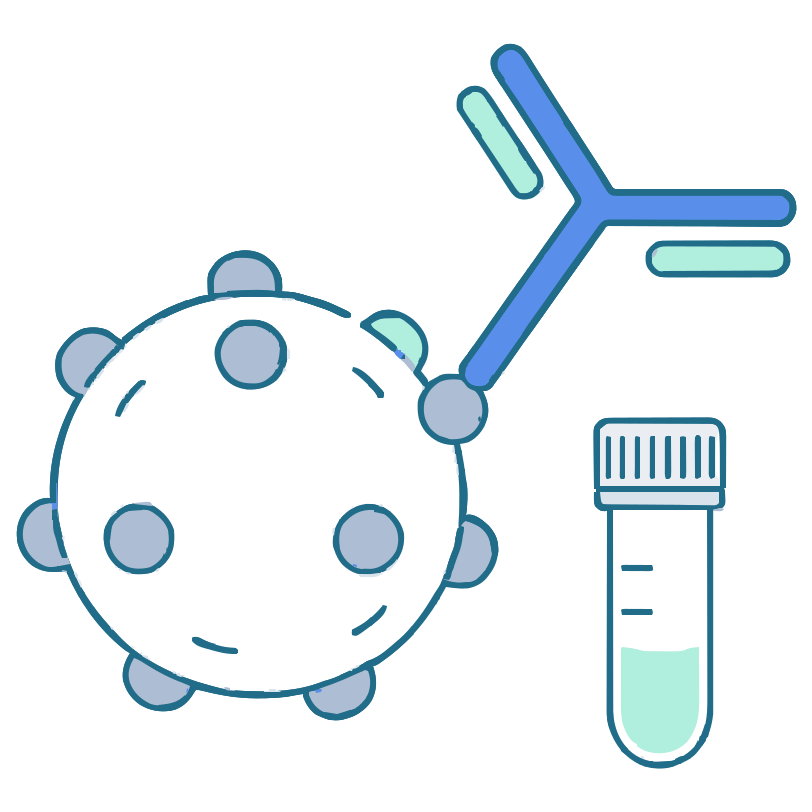
Prepare antigen and immunise animals; screen and express to obtain candidate antibodies
Use ELISA, BLI, flow cytometry and related methods to measure human/cyno EC50, affinity, internalisation and blocking activity
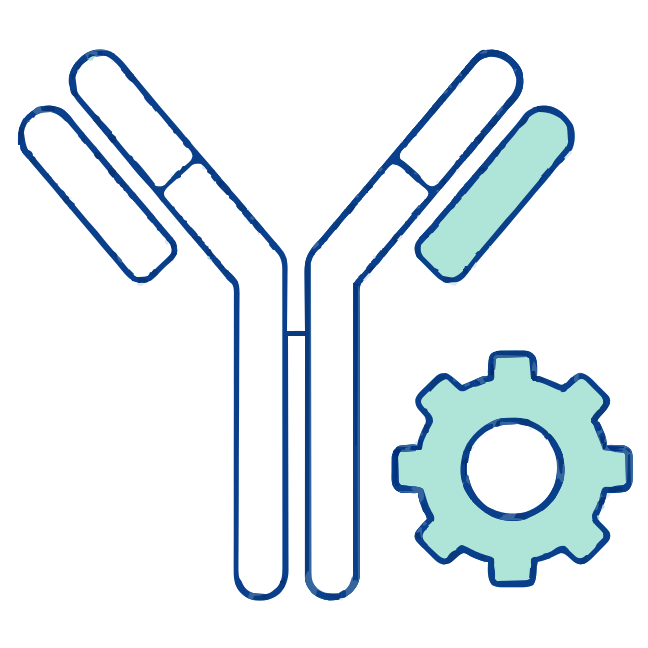
Humanise the candidate; verify accelerated and serum stability and purity (SEC)
Assess tumour inhibition in tumour-bearing models; deliver TGI and survival analysis in as little as 4 weeks

Advanced platforms, AI-assisted design and high-throughput screening lift both the speed and the success rate of lead discovery.
End-to-end service from target assessment and antibody discovery to engineering and efficacy evaluation — no handover gaps, simpler project management.
Beyond activity, we systematically assess pharmacokinetics, immunogenicity, stability and other developability attributes from the earliest stages.
Discovery routes and validation strategies tailored to each target and modality (mAb, bispecific, ADC).
EFS is built for cash-constrained early teams: R&D fees are offset with our full service stack in exchange for minority equity or single-pipeline economics, so programmes start with little or no cash and both sides share the upside.
Explore the EFS model →Share the intended application and what you already have in hand. A scientist — not a sales rep — will scope feasibility, suggest the right route and send a quote, usually within one business day.