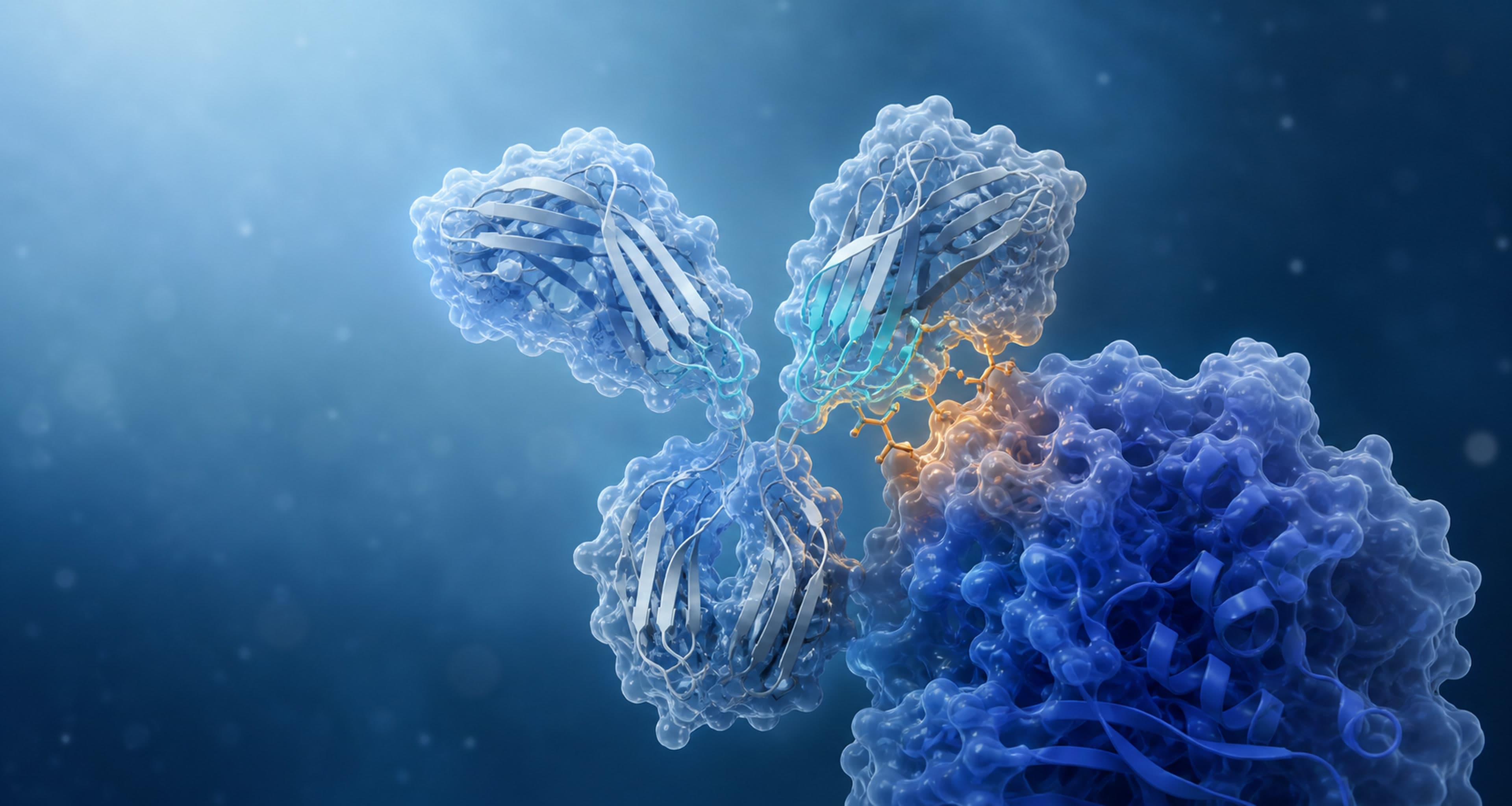
Antibody optimization begins once the lead molecule is confirmed: the lead antibody is humanized and affinity-matured to lower immunogenicity and raise target binding and physicochemical stability, improving druggability. Affinity maturation is delivered mainly through mutation library construction and display screening; humanization is grounded in rational CDR-grafting design and can be combined with library screening for framework optimization. Affinity retention after humanization can reach ≥80% and affinity maturation can improve affinity more than 10-fold, though actual results vary with the intrinsic properties of the lead antibody.
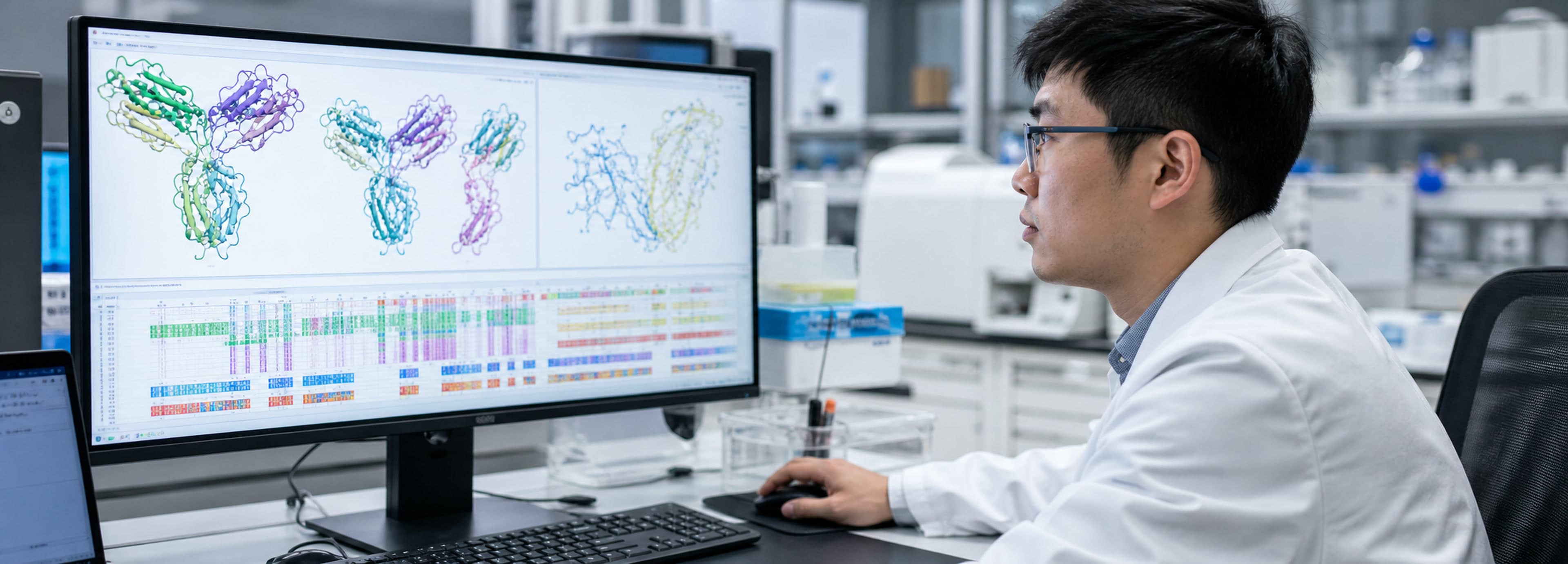
Humanization is the pivotal step in lowering the immunogenicity of a non-human antibody and moving an antibody drug toward the clinic. On a proven structural-biology and protein-engineering platform, we provide the full chain — parent sequence analysis, humanization design, variant construction, expression and purification, activity validation and candidate selection.
Homology modelling, CDR grafting and framework optimisation cut immunogenicity substantially while preserving high affinity and the intended functional activity, carrying an antibody drug quickly from research into preclinical development.
The service fits antibody drug programmes across oncology, autoimmune disease, infectious disease and other therapeutic areas.
Discuss project scope with our scientists. Share your antibody sequence and optimization objectives so we can discuss the appropriate next steps.

Affinity maturation and developability optimisation run mainly on display screening platforms: yeast display offers near-mammalian protein folding and modification, favouring antibodies with correct conformation and excellent stability, while phage display builds ultra-large libraries that support multi-round stringency screening.
 Yeast display platform
Antibody fragments are displayed on the Saccharomyces cerevisiae cell surface and sorted at high throughput by flow cytometry; a near-mammalian protein folding and processing system favours antibodies with correct conformation and excellent stability.
Learn more Phage display platform
Selection runs in vitro, free of the animal's immune tolerance, so specific antibodies can be enriched against targets that in vivo immunisation struggles with — self-antigens and highly toxic molecules included.
Learn more
Mesothelin, long underestimated, has moved from the lab to the clinical frontier across CAR-T, ADCs and bispecifics. With our cellular EC50 and internalisation data.
May 27, 2026
Both formats drop parts of the native immunoglobulin. We compare structure, solubility, stability, size and production cost, then their therapeutic use.
Jul 15, 2026

Heavy-chain-only antibodies, found in camelids and cartilaginous fish in the 1990s, lose the CH1 domain and pair no light chain — leaving a single variable domain of roughly 15 kDa, nanometre-scale.
Jun 10, 2026
Engineering is tailored to each molecule's intrinsic properties. We align on the project's target parameters up front, share every round of screening data during engineering, and deliver a complete project dossier covering sequences, activity and validation results.
Share the intended application and what you already have in hand. A scientist — not a sales rep — will scope feasibility, suggest the right route and send a quote, usually within one business day.