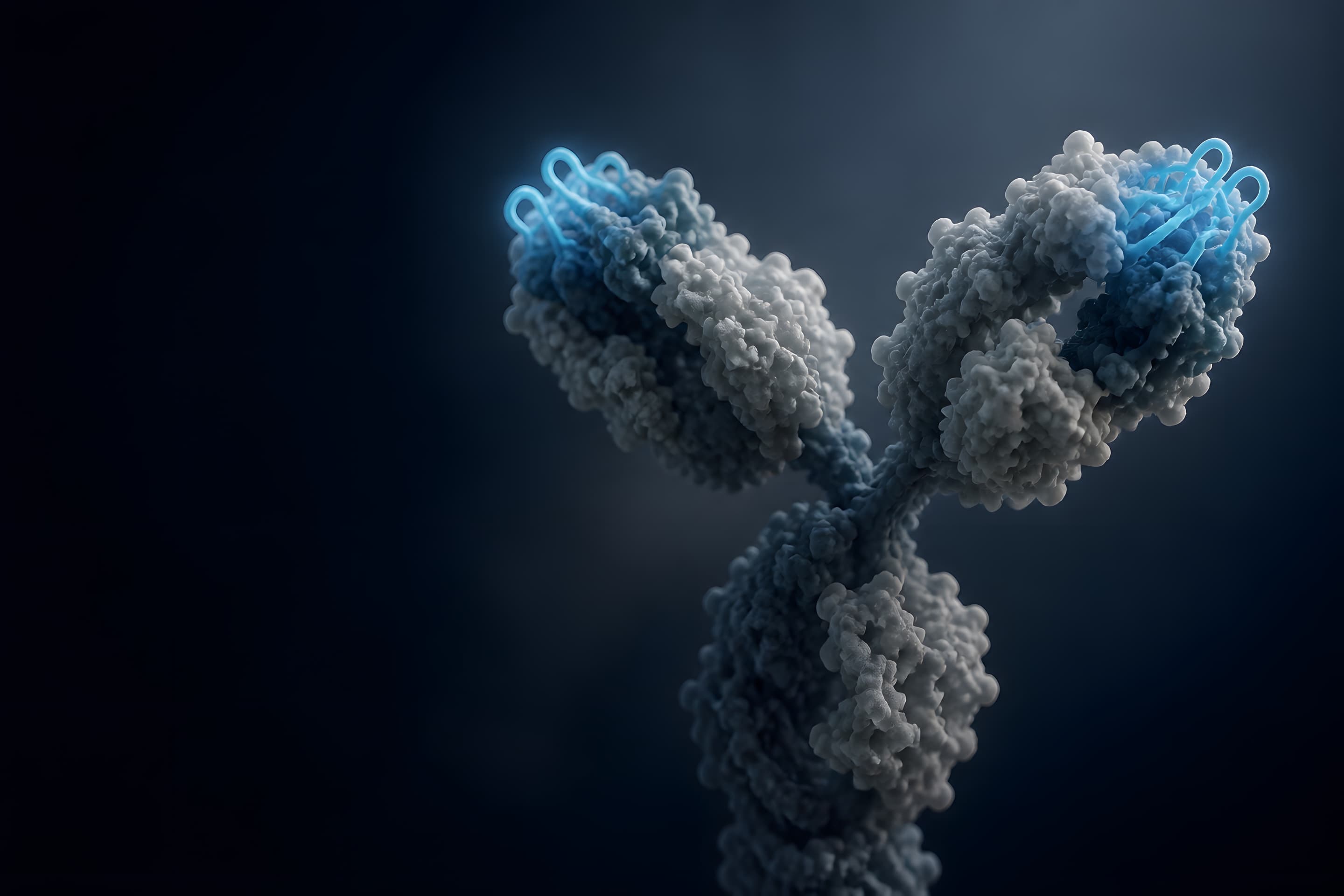
Antibody Optimization
CDR grafting or surface resurfacing lowers the immunogenicity of a non-human antibody, optimising the human sequence while preserving affinity.
Humanization is the pivotal step in lowering the immunogenicity of a non-human antibody and moving an antibody drug toward the clinic. On a proven structural-biology and protein-engineering platform, we provide the full chain — parent sequence analysis, humanization design, variant construction, expression and purification, activity validation and candidate selection.
Homology modelling, CDR grafting and framework optimisation cut immunogenicity substantially while preserving high affinity and the intended functional activity, carrying an antibody drug quickly from research into preclinical development.
The service fits antibody drug programmes across oncology, autoimmune disease, infectious disease and other therapeutic areas.
Enquire now →

Homology modelling and structural analysis combined with large human antibody sequence databases give a precise humanization design that balances reduced immunogenicity against retained activity.
CDR grafting, framework point mutation and surface-residue humanization are all available, matching parent antibodies of any type — murine, rabbit, nanobody and others.
Quality gates from sequence analysis through final activity testing secure high purity, high activity and low immunogenicity, with complete traceable data.
Hundreds of antibody humanization projects completed, including many difficult target classes, with delivery speed and success rates among the best in the field.

Eight stages, accommodating murine, rabbit, nanobody and other parent antibodies; each stage's outputs and acceptance criteria are in the specifications below.
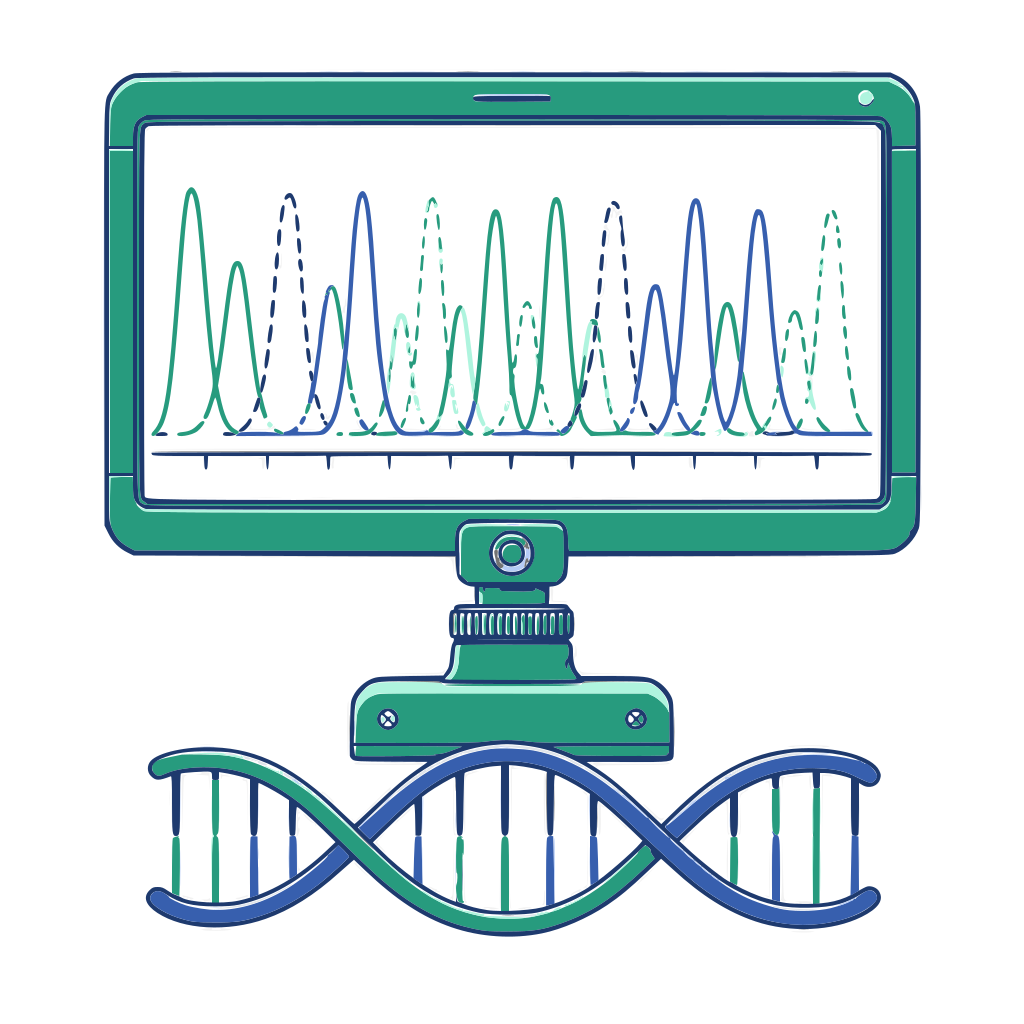
Variable-region sequencing and homology analysis delineate CDR and framework regions at ≥99% accuracy
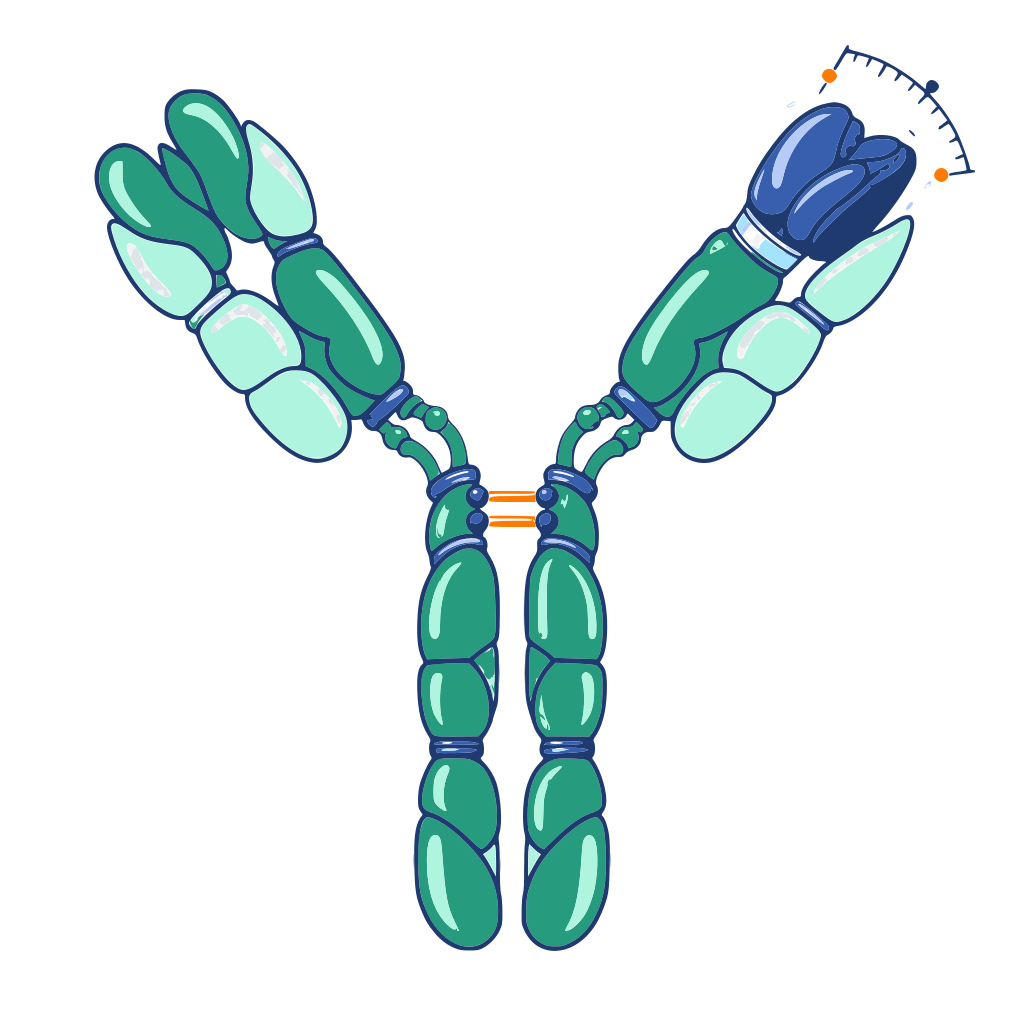
Designs from homology modelling and structural analysis, built into multiple variant expression vectors
Genes are synthesized and expression plasmids built and sequence-verified from the approved plan
Transient Expi293 expression — ≥1 mg per variant at ≥95% purity
Each humanized variant is affinity-purified and checked for purity
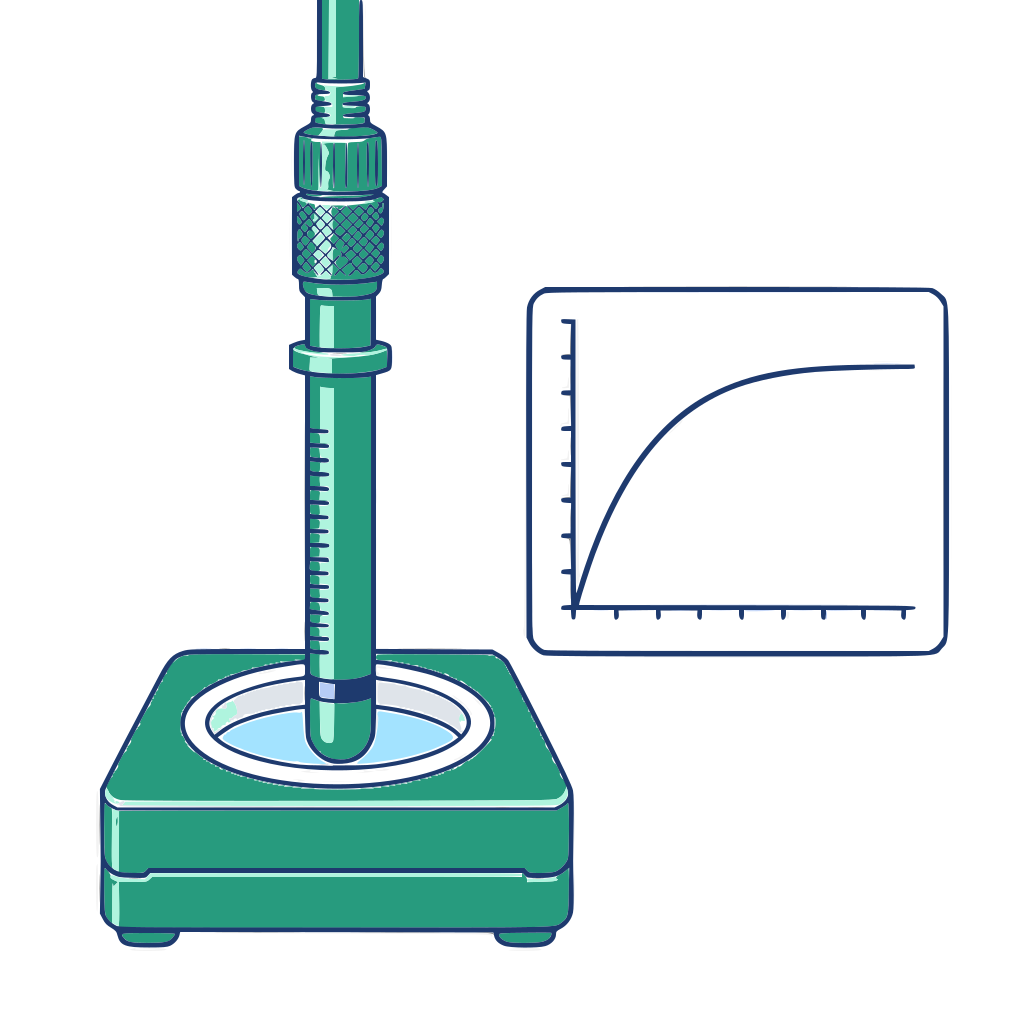
Affinity by BLI or ELISA, retention ≥80% versus the parent

Cross-reactivity testing confirms specificity, with fully traceable data
Design, variant sequences and vectors, purified antibodies and validation reports delivered
Sequence analysis through affinity validation totals roughly 7–11 weeks. Designs typically build several variants expressed and compared in parallel.
Homology modelling and structural analysis pair with vast human antibody sequence databases for precise designs that balance lower immunogenicity against retained activity. In our case study every humanized variant except the CDR-graft controls beat the parent's affinity — by up to 5-fold.
Deliverables, acceptance criteria and timelines by experimental stage. The staging differs from the process above: the process shows how a project runs, while this table is the acceptance basis written into the contract.
| Stage | Scope | Deliverables | Standards | Timeline |
|---|---|---|---|---|
| Parent antibody sequence analysis | Variable-region sequencing of the parent antibody, homology analysis and delineation of CDR and framework regions | Sequence analysis report with CDR mapping | Sequencing accuracy ≥99% with accurate CDR mapping | 1–2 weeks |
| Humanization design & variant construction | Humanization designed from homology modelling and structural analysis; multiple variant expression vectors constructed | Humanization design, variant sequences and expression vectors | Sound design, vectors successfully constructed and sequence-verified | 2–3 weeks |
| Humanized antibody expression & purification | Transient expression of variants in Expi293 cells, purification and concentration measurement | Purified antibody for each variant (≥1 mg per clone) with purification report | Antibody purity ≥95%, no visible degradation, concentration on target | 2–3 weeks |
| Affinity & specificity validation | Affinity to antigen measured by BLI or ELISA; specificity confirmed by cross-reactivity testing | Affinity data and specificity validation report | Affinity retention ≥80% versus the parent antibody, no cross-reactivity | 2–3 weeks |
SJN131 is the parent antibody and SJN132–SJN142 are humanized variants. Apart from the CDR-graft antibodies SJN132 and SJN137, which show no binding, every humanized variant improved on the parent's affinity — by up to 5-fold.
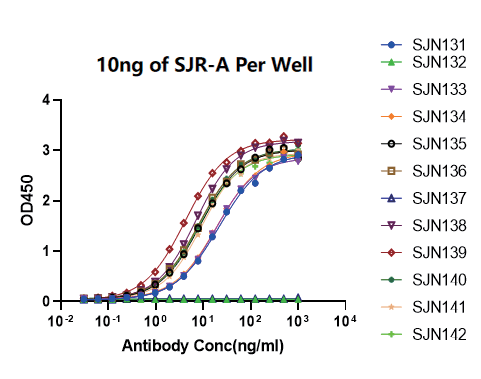
ELISA binding curves for the twelve antibodies SJN131–SJN142; x-axis antibody concentration (ng/ml), y-axis OD450.
| Antibody ID | EC50 |
|---|---|
| SJN131 | 21.76 |
| SJN132 | unstable |
| SJN133 | 18.56 |
| SJN134 | 19.84 |
| SJN135 | 8.807 |
| SJN136 | 7.96 |
| SJN137 | unstable |
| SJN138 | 7.054 |
| SJN139 | 4.294 |
| SJN140 | 8.298 |
| SJN141 | 9.343 |
| SJN142 | 8.094 |
Share the intended application and what you already have in hand. A scientist — not a sales rep — will scope feasibility, suggest the right route and send a quote, usually within one business day.