

Jun 24, 2026
In the era of blooming tumor targeted therapy, identifying therapeutic targets with unique biological mechanisms and broad clinical potential has become the core R&D priority of pharmaceutical enterprises. Mesothelin (MSLN), a long-underestimated GPI-anchored membrane protein, has rapidly advanced from the laboratory to the clinical frontier in recent years. Its role as a multifunctional driver in tumor invasion, metastasis and immune escape has been continuously revealed. MSLN-targeted therapies, ranging from CAR-T cell therapy and antibody-drug conjugates (ADCs) to bispecific antibodies and cancer vaccines, have demonstrated remarkable potential in multiple tumor types. To understand the origin of this R&D boom, it is essential to delve into the unique biological characteristics of MSLN and explore its pivotal role in the tumor microenvironment.
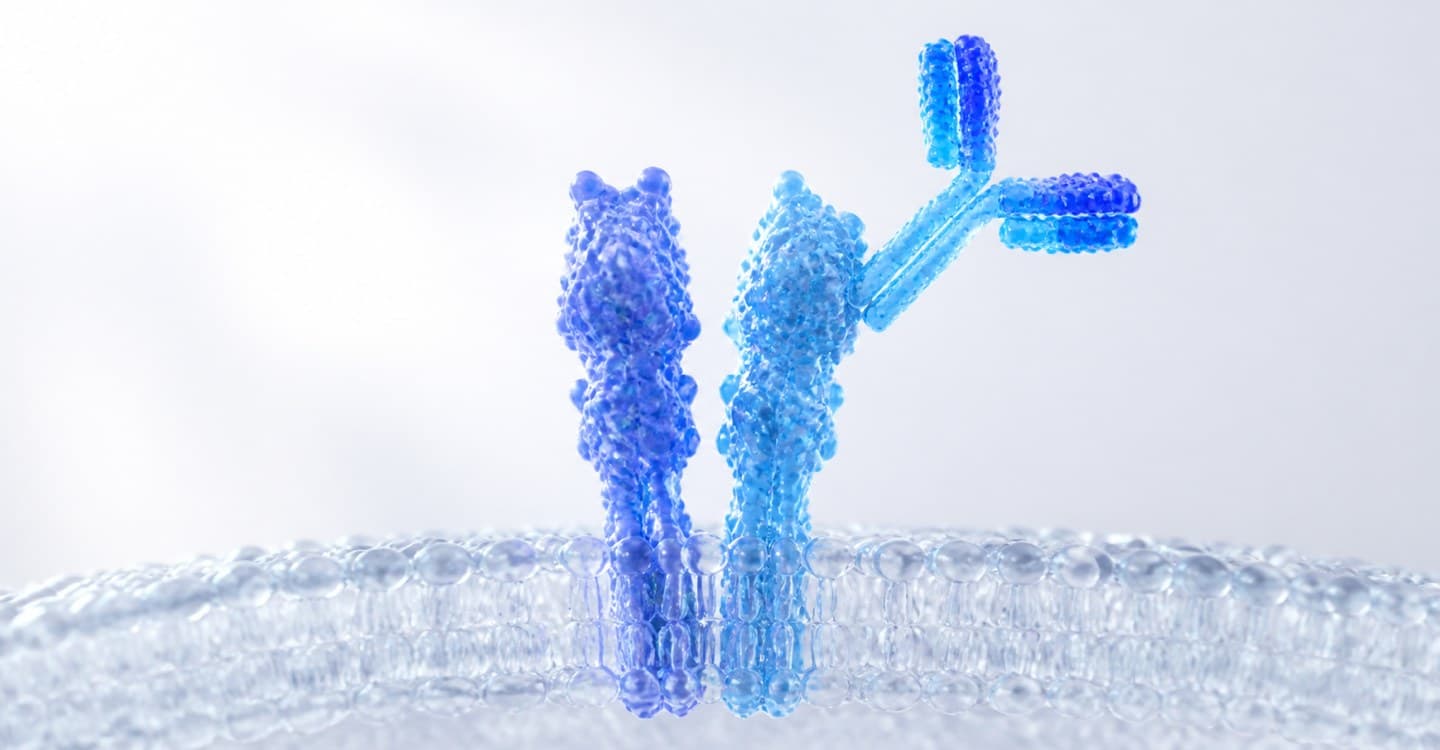
Mesothelin is a GPI-anchored cell surface glycoprotein encoded by the MSLN gene, located at chromosome 16p13.3 in humans. The gene consists of 15 exons with a coding region of 1884 bp, encoding a precursor protein of approximately 69 kDa. Cleaved by furin at the R295 site, the precursor protein generates two fragments: mature MSLN (~41 kDa) and megakaryocyte potentiating factor (MPF, ~31 kDa). Mature MSLN is anchored to the cell membrane via a GPI moiety. Its extracellular domain contains 5 ARM repeats and 2 HEAT repeats, forming a unique right-handed superhelical structure rarely found in the human proteome.
MSLN possesses a highly ordered structure: 17 short α-helices are arranged into 4 α-helical domains to form a compact right-handed superhelix. Domains A and B constitute the high-affinity binding interface for MUC16 (CA125), while Domains C and D are proximal to the cell membrane, participating in structural stability, glycosylation and positioning of protease recognition sites. MSLN has three conserved N-glycosylation sites at N388, N496 and N523, which are critical for structural stability and physiological function.
In normal adult tissues, MSLN expression is highly restricted to mesothelial tissues such as pleura, pericardium and peritoneum, with almost no expression in vital organs including lung, kidney and liver. MSLN knockout mice show no abnormalities in growth, development or reproduction, indicating that MSLN is not physiologically indispensable under normal conditions. However, during tumorigenesis, MSLN is reactivated and aberrantly overexpressed: significant overexpression is observed in 85–90% of mesothelioma, 80–85% of pancreatic cancer, 60–65% of ovarian cancer, lung cancer and cholangiocarcinoma. This tumor-specific expression pattern makes MSLN an ideal therapeutic target.
The interaction between MSLN and MUC16 (CA125) is the core mechanism driving peritoneal metastasis. As an important member of the mucin family highly expressed in various tumors, MUC16 serves as a key binding partner of MSLN. The binding of MSLN to MUC16 not only enhances tumor cell adhesion but also upregulates MMP7 expression through the PI3K/AKT signaling pathway, thereby promoting tumor cell invasion. Clinical studies confirm that co-expression of MSLN and MUC16 is significantly correlated with tumor progression and adversely affects patient prognosis.
MSLN drives tumor metastasis via multiple molecular pathways. It enhances MET expression and phosphorylation through the JNK pathway, increasing the ability of tumor cells to penetrate the blood–brain barrier. Meanwhile, MSLN activates the MAPK/ERK and JNK pathways, inducing the expression of transcription factor AP-1 and further upregulating MMP-7 to degrade the extracellular matrix and boost tumor invasion and metastasis. In addition, MSLN binding to MUC16 activates the SGK3/FOXO3 pathway, downregulates DKK1, relieves inhibition of the Wnt/β-catenin pathway, and activates downstream target genes associated with tumor invasion.
EMT is an early event in tumor metastasis tightly regulated by multiple molecules, in which MSLN plays a key initiating role. Studies show that MSLN overexpression increases mesenchymal markers and decreases epithelial markers, facilitating EMT progression. Conversely, MSLN knockdown reverses EMT, restores epithelial marker expression, and effectively inhibits tumor cell migration.
MSLN induces chemoresistance in tumor cells through multiple mechanisms. It inhibits caspase activation induced by paclitaxel via the PI3K/AKT pathway and upregulates anti-apoptotic proteins such as Bcl-2 and Mcl-1, forming a dual drug-resistance barrier. In breast cancer models, MSLN also suppresses Bim-mediated apoptosis through the ERK pathway, further strengthening chemoresistance during metastasis. Clinical data analysis indicates that high MSLN expression is negatively correlated with chemotherapy response rate in stage IV colorectal cancer patients, highlighting its vital role in chemoresistance.
MSLN facilitates immune escape by remodeling the tumor microenvironment. Phospholipase D cleaves the GPI anchor of MSLN and releases soluble MSLN retaining the GPI moiety. Its mannose moiety binds to CD206 on macrophages, inducing M2 macrophage polarization and forming an immunosuppressive microenvironment. Furthermore, MSLN increases IL-6 secretion via the NF-κB pathway. IL-6 not only upregulates anti-apoptotic proteins but also promotes STAT3 phosphorylation to drive cell cycle progression, enabling sustained tumor growth in a harsh microenvironment.
Given its core functions in driving tumor proliferation, metastasis, drug resistance and immune escape, MSLN has become a hotspot targeted by global innovative pharmaceutical companies. Multiple technical routes including ADCs, bispecific antibodies, CAR-T and CAR-NK are advancing simultaneously with numerous ongoing clinical trials.
The exploration of MSLN-targeted therapy dates back to 2002, when Hassan et al. conducted the first clinical trial of recombinant anti-MSLN immunotoxin. The trial demonstrated good overall tolerability, yet limited clinical efficacy as monotherapy, with only a few partial responses and stable disease cases observed. Since then, diverse MSLN-targeted strategies have been developed and validated in preclinical and clinical studies.
To overcome the limitations of single-target therapy, researchers are actively exploring dual-target design and combination regimens:
Dual-target CAR-NK Cell Therapy: EB-DuoNK-MSLN/EGFR developed by a Chinese biotechnology company is the first dual-target CAR-NK product targeting both MSLN and EGFR to address antigen escape caused by tumor heterogeneity. It adopts allogeneic umbilical cord blood-derived NK cells, engineered to express IL-15 for enhanced in vivo persistence, and is equipped with an inducible safety switch (iCasp9) to rapidly eliminate CAR-NK cells in case of severe toxicity. The clinical trial was launched in February 2026, with preliminary result analysis expected in 2027.
Combination Therapy Strategy: Considering the critical role of MSLN in chemoresistance, MSLN-targeted therapy is recommended for first-line treatment rather than only for recurrent disease. Moreover, the combination of MSLN-targeted agents with immune checkpoint inhibitors shows promising potential to improve the immunosuppressive microenvironment induced by MSLN.
The increasingly diversified clinical pipeline indicates that MSLN R&D has moved beyond proof-of-concept into an era of precision, multifunctionality and technological innovation. Whether designing membrane-restricted epitopes to avoid antigen shedding (e.g., JNJ-79032421) or applying dual-target CAR-NK to overcome tumor heterogeneity (e.g., EB-DuoNK-MSLN/EGFR), successful R&D relies fundamentally on lead antibodies with high affinity, strong internalization activity and diverse epitopes, as well as well-validated target protein and cell models for screening and verification.
| Pipeline | Developer | Modality | R&D Phase |
|---|---|---|---|
| Anetunab Ravtansine | Bayer | ADC | Phase II (in combination with Pembrolizumab) |
| DMOT4039A | Genentech (Roche) | Monoclonal Antibody (mAb) | Phase II |
| RC88 | Rongchang Biotech | ADC | Phase II |
| JNJ-79032421 | Johnson & Johnson | Bispecific Antibody | Preclinical / IND-enabling |
| A2B-694 | A2 Biotherapeutics | CAR-T | Phase I/II |
| ABBV-428 | AbbVie | Bispecific Antibody | Phase I |
| KD-021 | Kaidi Biotech | CAR-T | Phase I |
| BMS-986148 | Bristol-Myers Squibb (BMS) | ADC | Phase I |
| ANG 305 | Amgen | Bispecific Antibody | Phase I |
| GC-00BT | Douxi Biotech | CAR-T | Phase I |
| LB1902 | Legend Biotech | CAR-T | Phase I |
| MCY-M11 | MaxCyte | CAR-T | Phase I |
| NI-1801 | Light Chain Bioscience | Bispecific Antibody | Phase I |
| KJ-C2113 | CARsgen Biotech | CAR-T | Preclinical |
| KT032 | Nanjing CAR-T Medical | CAR-T | Preclinical |
| HBM9033 | HBM Holdings (Hengli Biotech) | ADC | Preclinical |
| NM28 | Sansheng Guojian Nunab | Bispecific Antibody | Preclinical |
| DUAL-OV-CAR-NK and EB-DuoNK-MSLN/EGFR | Beijing Biotech | CAR-NK Cell Therapy | Phase I/II Clinical (Initiated in Feb 2026) |
| ZW171 | Zyneworks | Bispecific Antibody | Phase I Clinical (Dose Escalation Completed) |
As an innovative enterprise focusing on nanobody discovery and early-stage R&D CRO services, Sanjing Bio deeply recognizes the decisive importance of high-quality starting materials for developing challenging targets such as MSLN. Facing the coexistence of high challenges and great potential of the MSLN target, we provide a comprehensive solution covering target proteins and customized nanobodies, offering experimentally validated key components for early pharmaceutical R&D.
Our expressed and purified MSLN protein is identified by SDS-PAGE, ELISA and multiple assays, with purity over 90% and excellent ELISA binding activity.
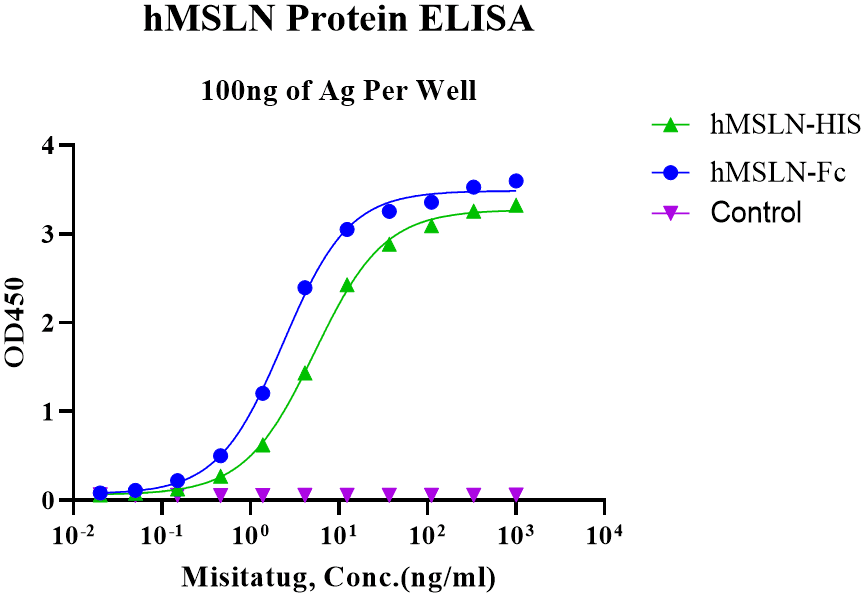
Based on an efficient phage display integrated platform, we have screened multiple anti-MSLN antibodies with outstanding binding and functional profiles. Verified by ELISA and flow cytometry, these antibodies exhibit high affinity and excellent cellular binding activity.
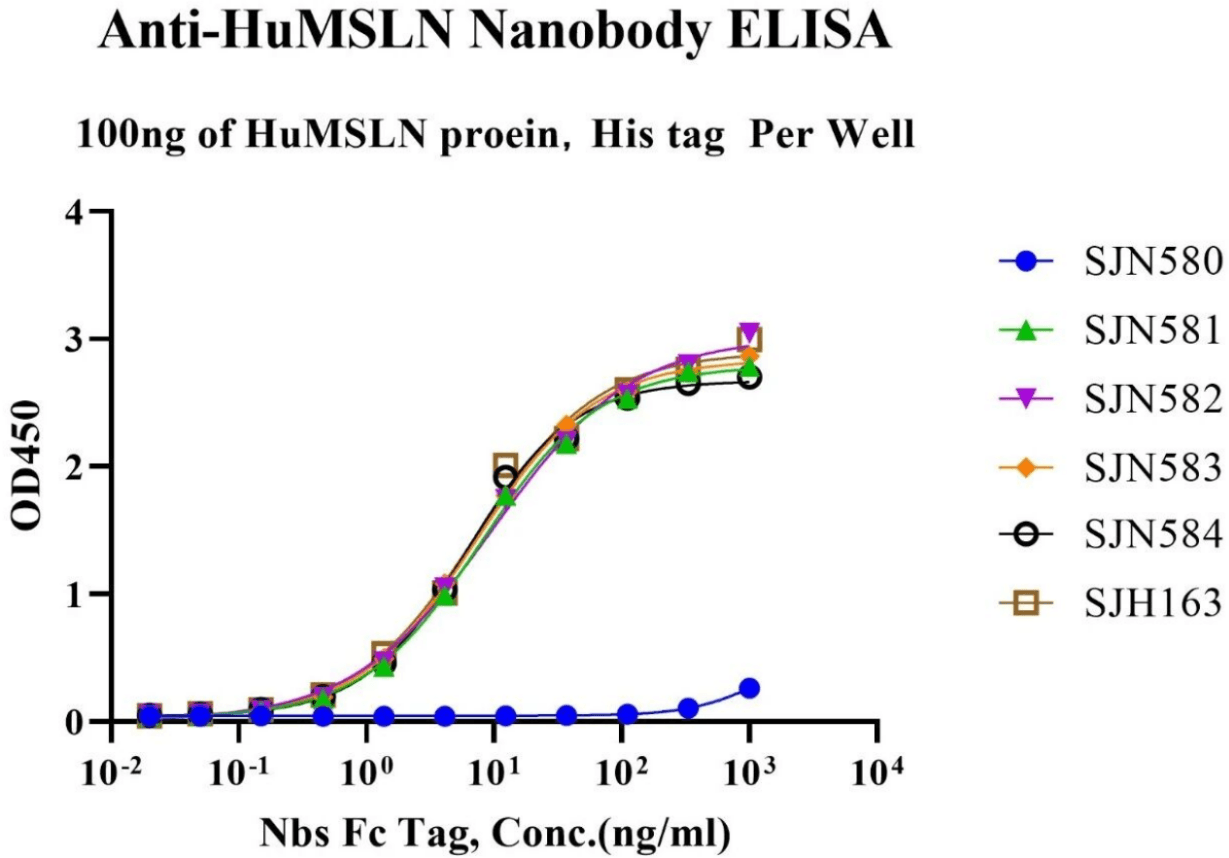
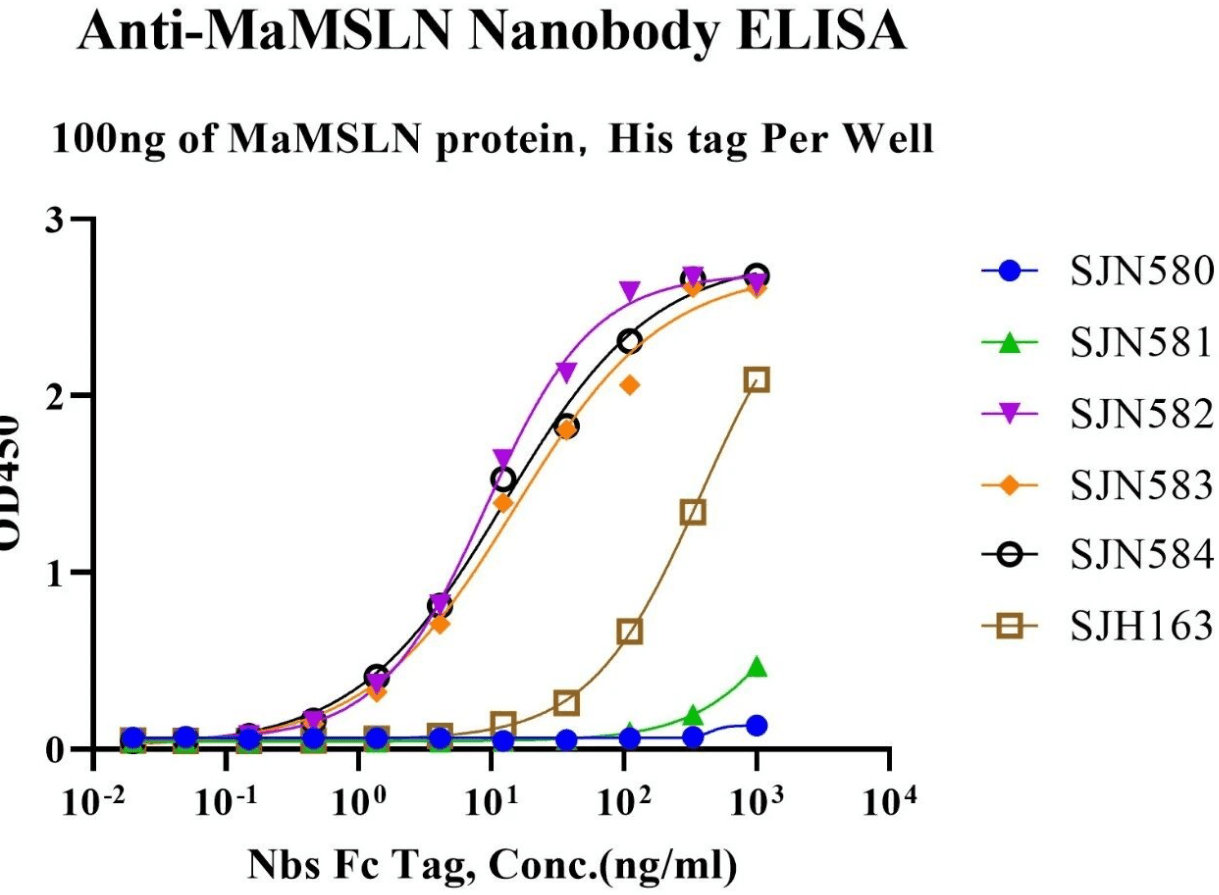
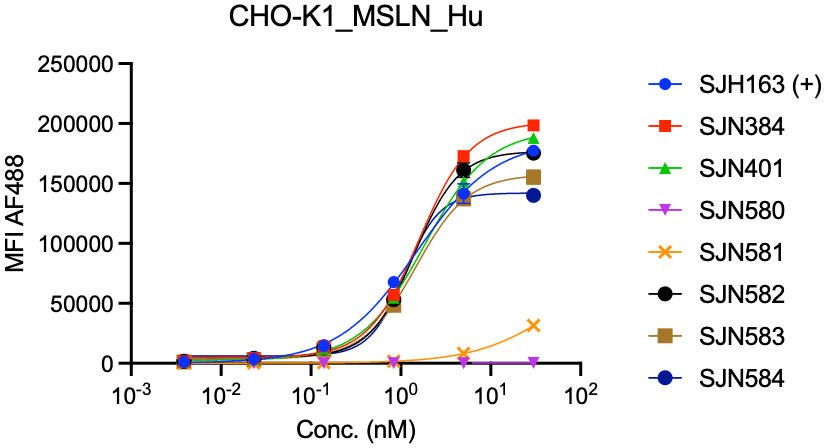
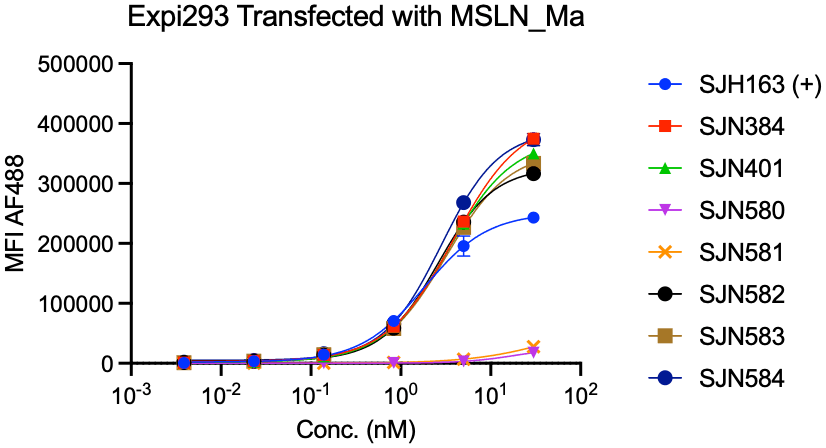
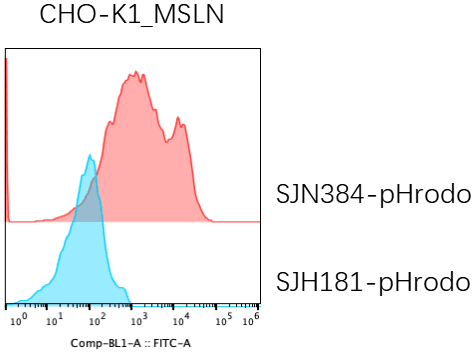
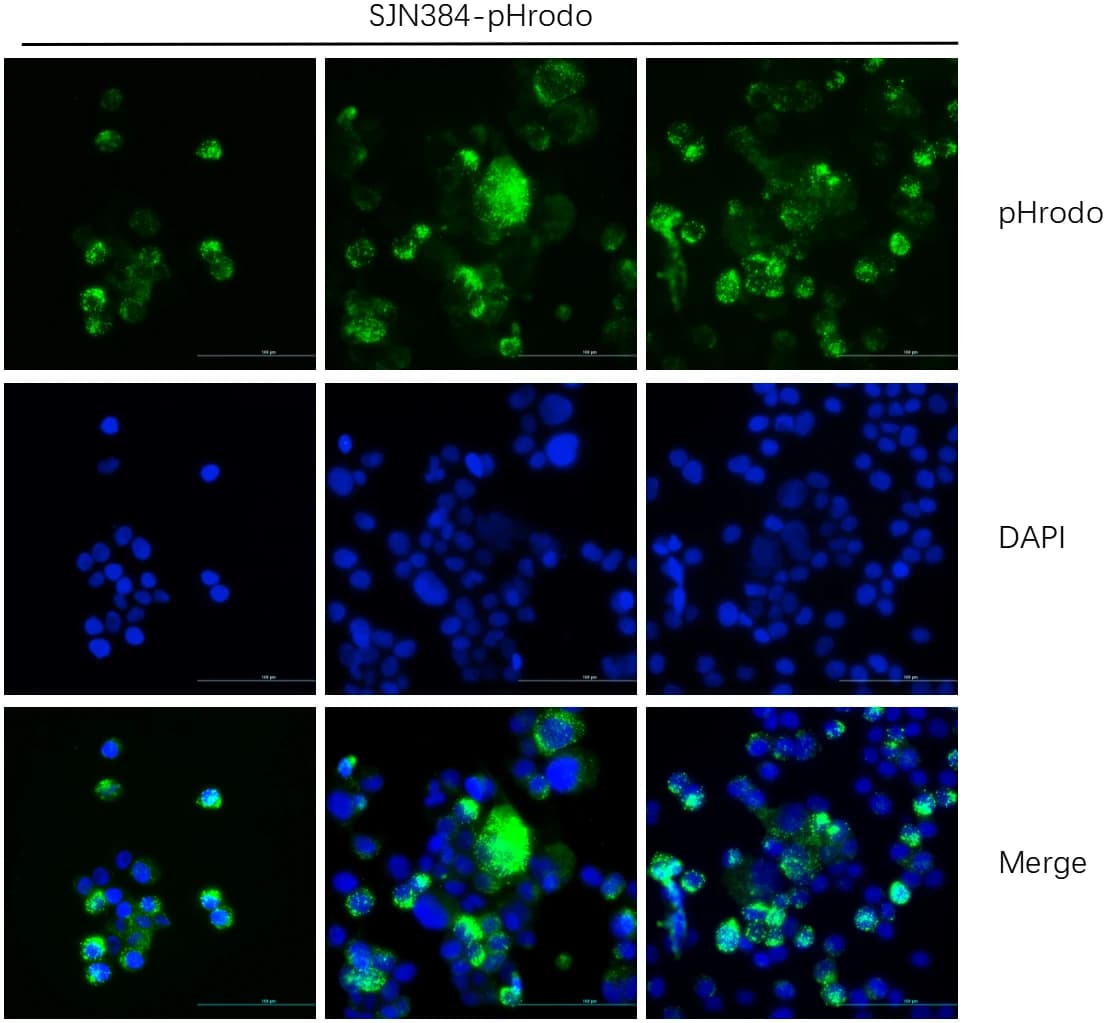
In MSLN-targeted drug development, antibody internalization capacity is a core index determining whether drugs can enter tumor cells and exert therapeutic effects. Based on our high-affinity anti-MSLN antibodies, we further performed in-depth functional validation via pHrodo internalization assays, providing comprehensive key data for drug screening and mechanism research.
Jun 24, 2026

Jul 15, 2026

Jun 10, 2026
Share the intended application and what you already have in hand. A scientist — not a sales rep — will scope feasibility, suggest the right route and send a quote, usually within one business day.