Antigen Preparation
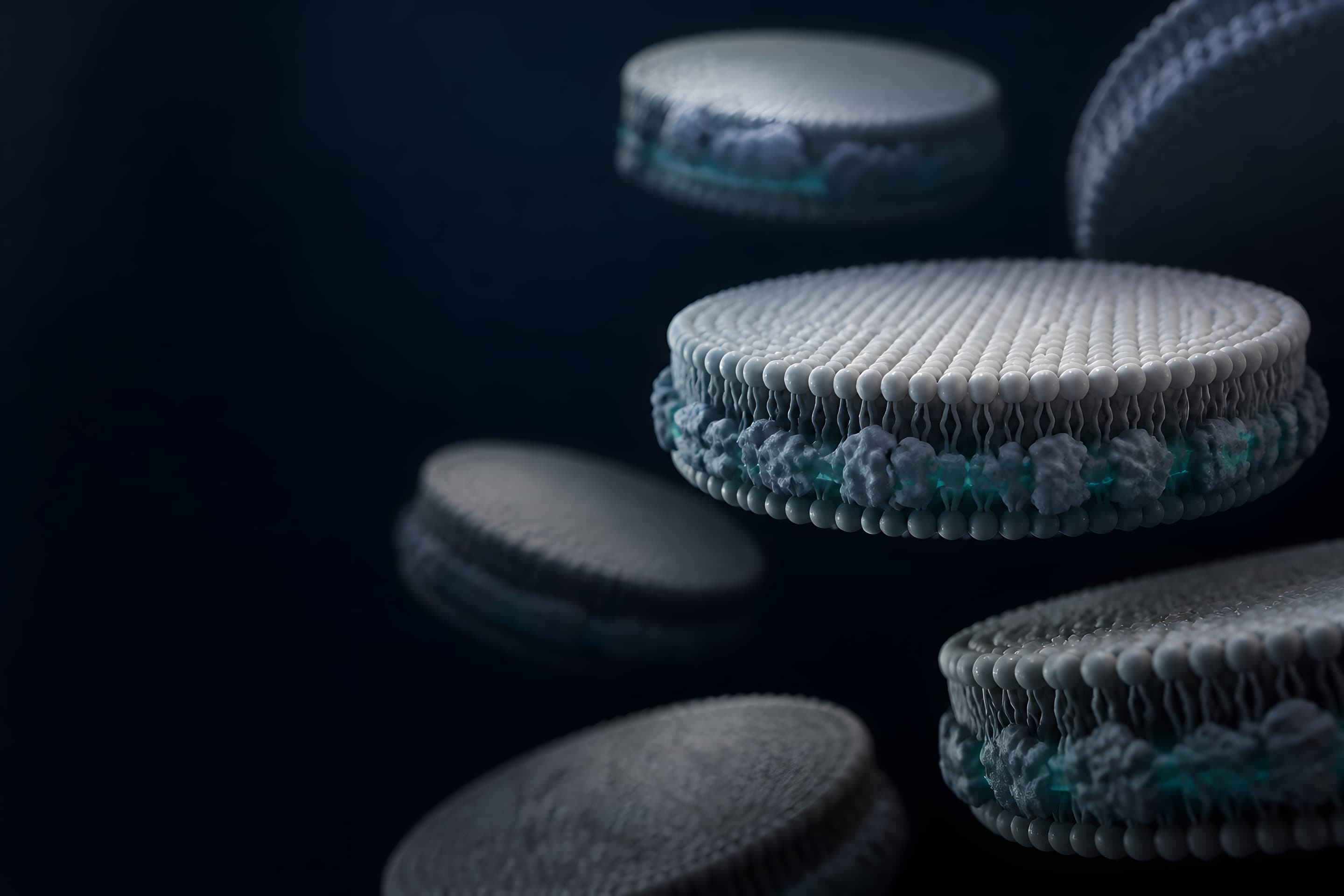
MSP scaffold proteins wrap phospholipids into nanodiscs that mimic the native lipid raft, keeping membrane-protein antigens in their natural conformation.
Nanodiscs recreate the native lipid raft: MSP scaffold proteins wrap phospholipids into a disc that keeps complex membrane proteins in their natural conformation — a need plain recombinant antigens cannot meet.
We provide one-stop custom antigens across every molecule type for antibody drug development, vaccine research and in vitro diagnostics. Four core platforms — recombinant protein, nanodisc, virus-like particle (VLP) and mRNA — address the specific bottlenecks each molecule type brings to antigen preparation.
Whether you need an immunogen for animal immunisation, a detection antigen for antibody screening or a functional antigen for proof of concept, we match the expression system and presentation format to the molecule's structure and its application — delivering from sequence to functional antigen quickly.
Enquire now →

Recombinant protein, nanodisc, VLP and mRNA presentation systems combined — covering the full antigen spectrum from transmembrane proteins to small molecules.
Nanodiscs mimic the native lipid environment, VLPs self-assemble into viral geometry, and mRNA is translated and folded in vivo.
Parallel workstreams with real-time milestone updates cut average delivery time by more than 30%.
Multiple tags, modifications and formulations supported, from research grade through pilot scale.

Four stages. The membrane protein and MSP scaffold are co-expressed and co-purified before assembly, with DLS and negative-stain TEM confirming the structure; outputs and acceptance criteria are in the specifications below.
The membrane protein is assessed and an MSP scaffold plus lipid combination chosen

Membrane protein gene synthesis and MSP scaffold vector construction, sequence-verified
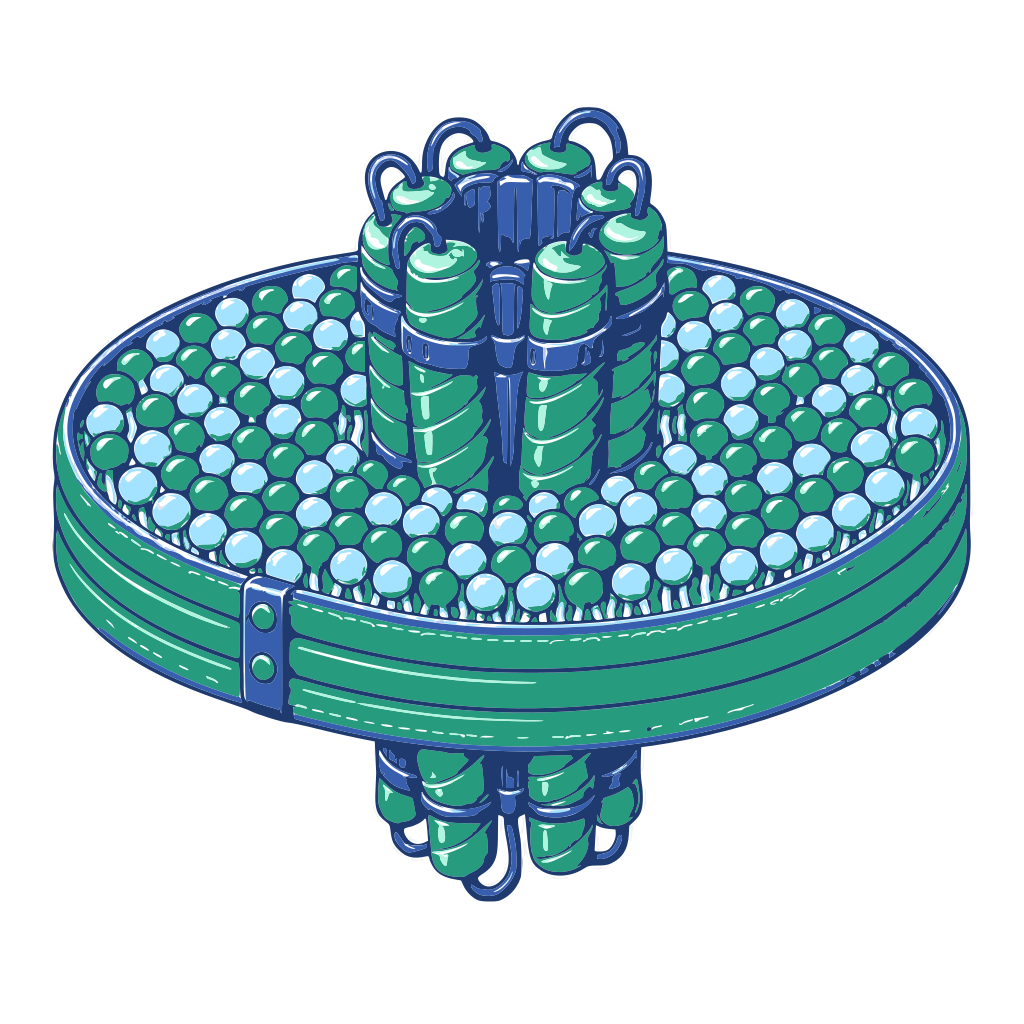
Membrane protein expressed, lipids inserted and MSP wrapped into assembled nanodisc stock

SEC-MALS, dynamic light scattering, TEM imaging and endotoxin testing, delivered with a COA and electron micrographs
Vector construction takes 7–10 working days, nanodisc assembly 10–14, and QC with formulation 3–5 — roughly 20–29 working days in total.
Nanodiscs recreate the native lipid raft so complex membrane proteins keep their natural conformation — a need plain recombinant antigens cannot meet. Acceptance is gated twice: uniform DLS particle size (10–15 nm) and negative-stain TEM confirming the disc structure, at ≥90% monodispersity.
Deliverables, acceptance criteria and timelines by experimental stage. The staging differs from the process above: the process shows how a project runs, while this table is the acceptance basis written into the contract.
| Stage | Scope | Deliverables | Standards | Timeline |
|---|---|---|---|---|
| Nanodisc membrane protein antigen platform | ||||
| Vector construction | Membrane protein gene synthesis and MSP scaffold protein vector construction | Co-expression / co-purification system plasmids | Sequence verified | 7-10 business days |
| Nanodisc assembly | Membrane protein expression → phospholipid incorporation → MSP-wrapped assembly | Assembled nanodisc stock | Uniform DLS particle size (10–15 nm), disc structure confirmed by negative-stain EM | 10-14 business days |
| QC & formulation | SEC-MALS, dynamic light scattering, TEM imaging and endotoxin testing | CoA, EM images, DLS spectra and liquid formulation | Monodispersity ≥90% with confirmed disc structure | 3-5 business days |
Share the intended application and what you already have in hand. A scientist — not a sales rep — will scope feasibility, suggest the right route and send a quote, usually within one business day.