Antigen Preparation
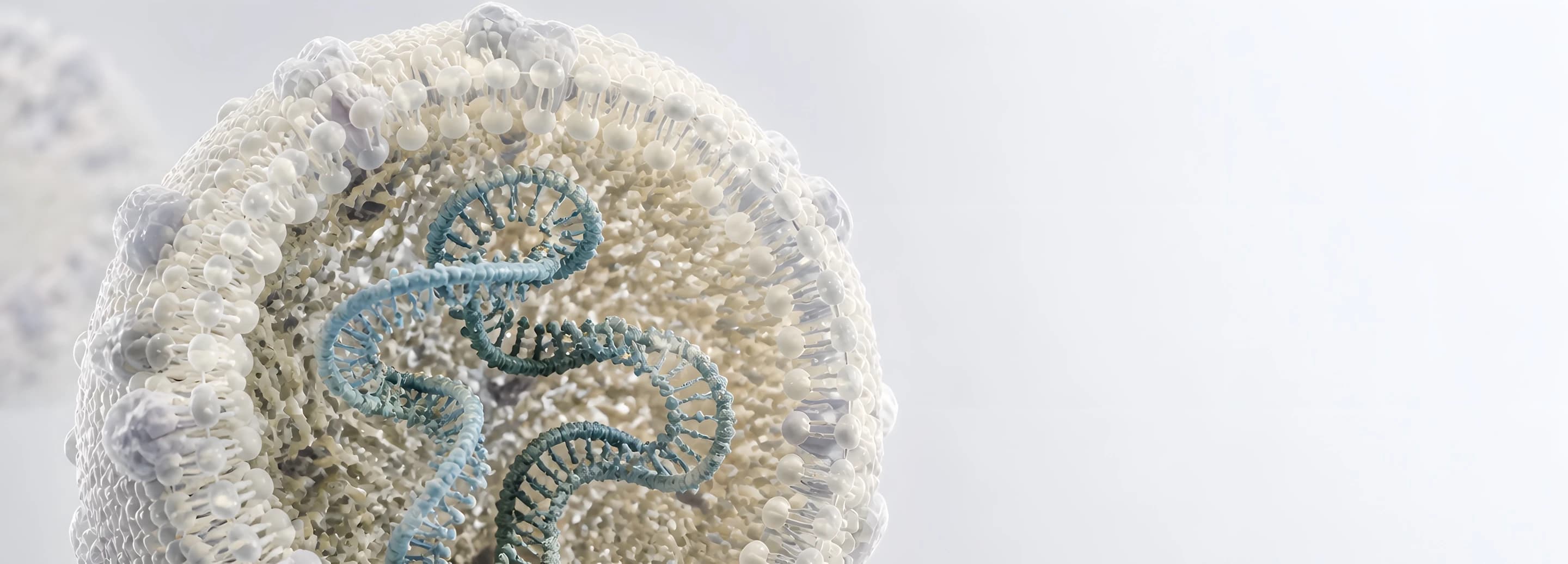
In vitro transcribed, modified mRNA antigens delivered in lipid nanoparticles translate and fold precisely in vivo, launching an immune response fast.
Modified mRNA antigens are produced by in vitro transcription and delivered in lipid nanoparticles, rapidly activating an in vivo immune response and shortening antibody development. The antigen protein is translated in situ within host cells and uses the cell's natural folding machinery to accurately reproduce its native conformation.
We provide one-stop custom antigens across every molecule type for antibody drug development, vaccine research and in vitro diagnostics. Four core platforms — recombinant protein, nanodisc, virus-like particle (VLP) and mRNA — address the specific bottlenecks each molecule type brings to antigen preparation.
Whether you need an immunogen for animal immunisation, a detection antigen for antibody screening or a functional antigen for proof of concept, we match the expression system and presentation format to the molecule's structure and its application — delivering from sequence to functional antigen quickly.
Enquire now →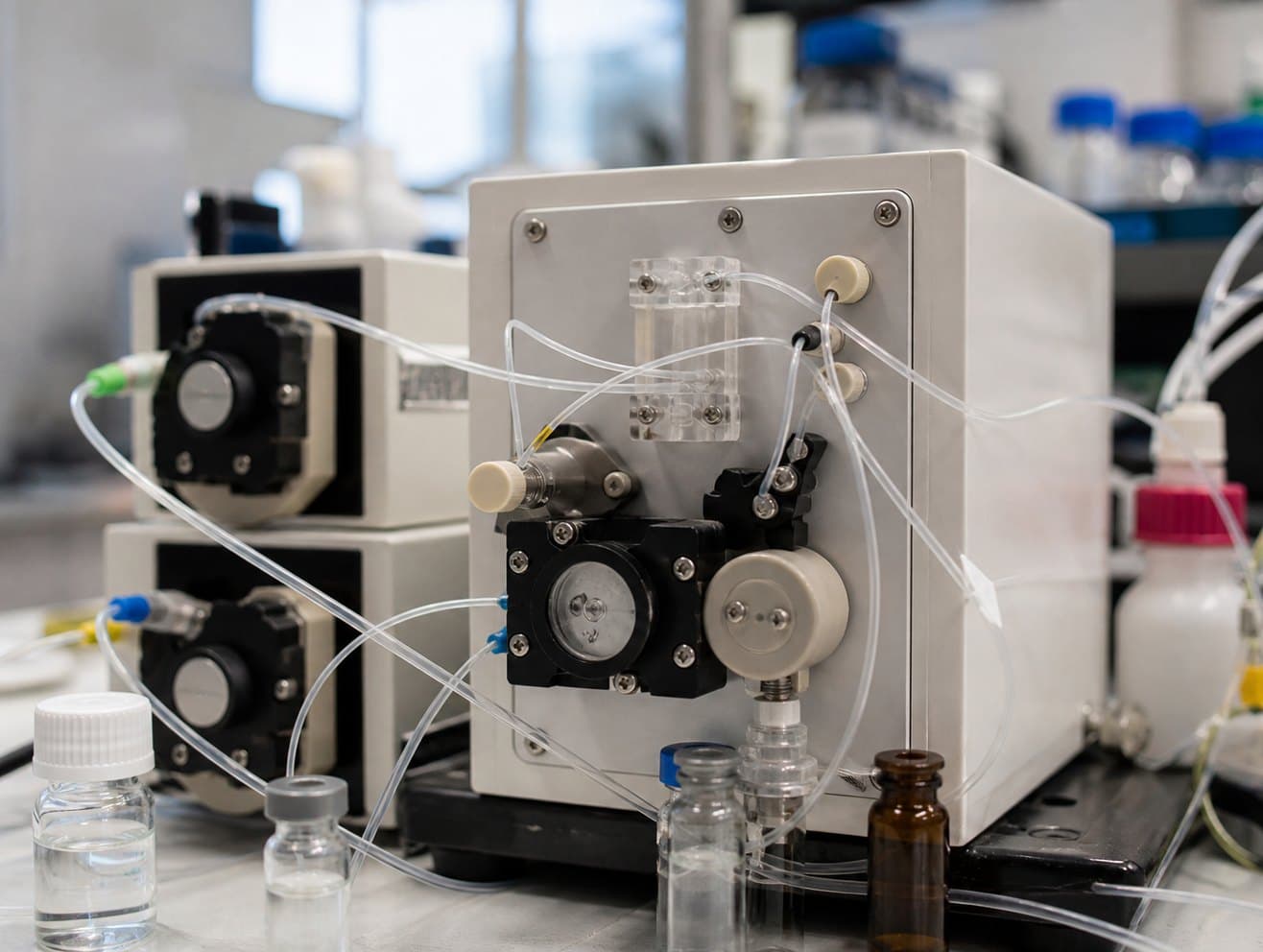

Recombinant protein, nanodisc, VLP and mRNA presentation systems combined — covering the full antigen spectrum from transmembrane proteins to small molecules.
Nanodiscs mimic the native lipid environment, VLPs self-assemble into viral geometry, and mRNA is translated and folded in vivo.
Parallel workstreams with real-time milestone updates cut average delivery time by more than 30%.
Multiple tags, modifications and formulations supported, from research grade through pilot scale.

Four stages from template construction to QC release. With mRNA as the antigen the protein is translated in vivo and folded by the cell's own machinery, preserving native conformation; outputs and acceptance criteria are in the specifications below.

Codon optimisation, UTR design and linearised plasmid preparation, verified fully linear by digestion
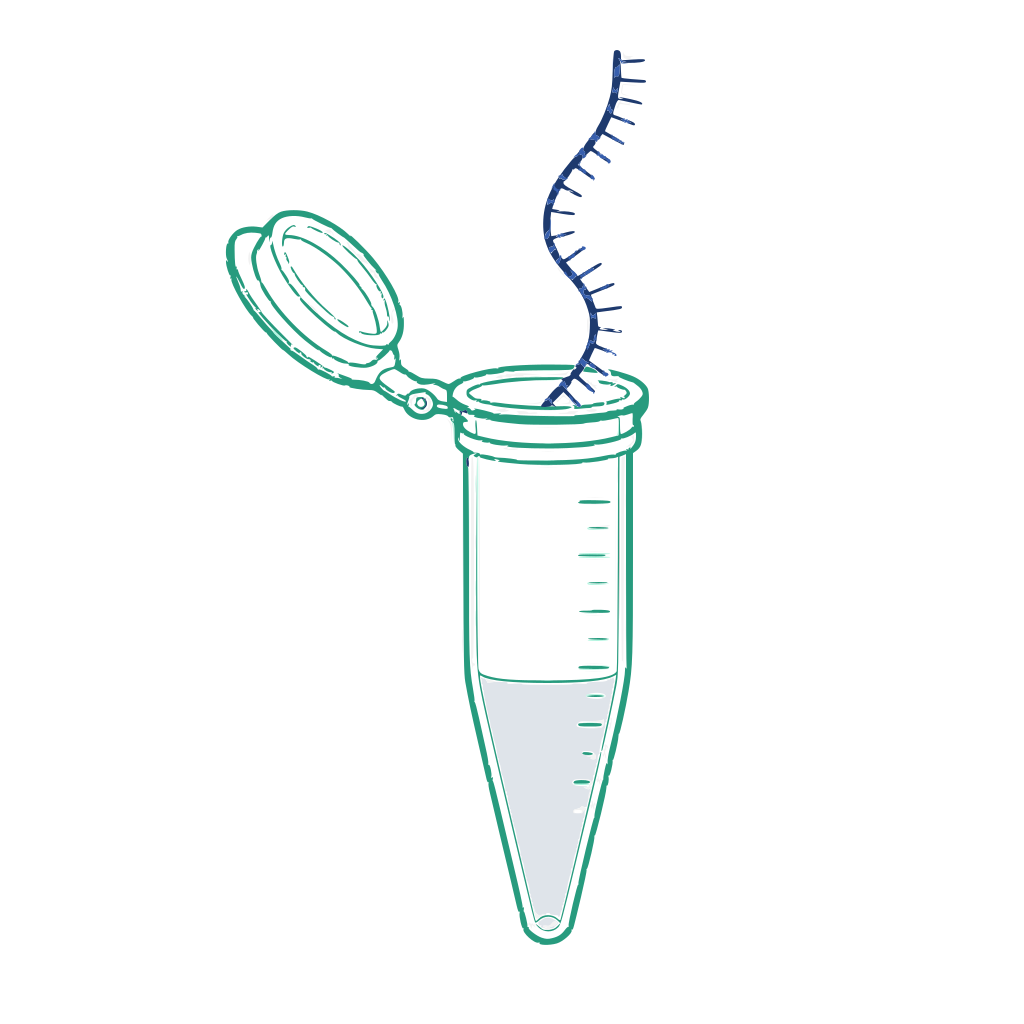
In vitro transcription, Cap1 capping, enzymatic tailing and magnetic-bead/LCC purification
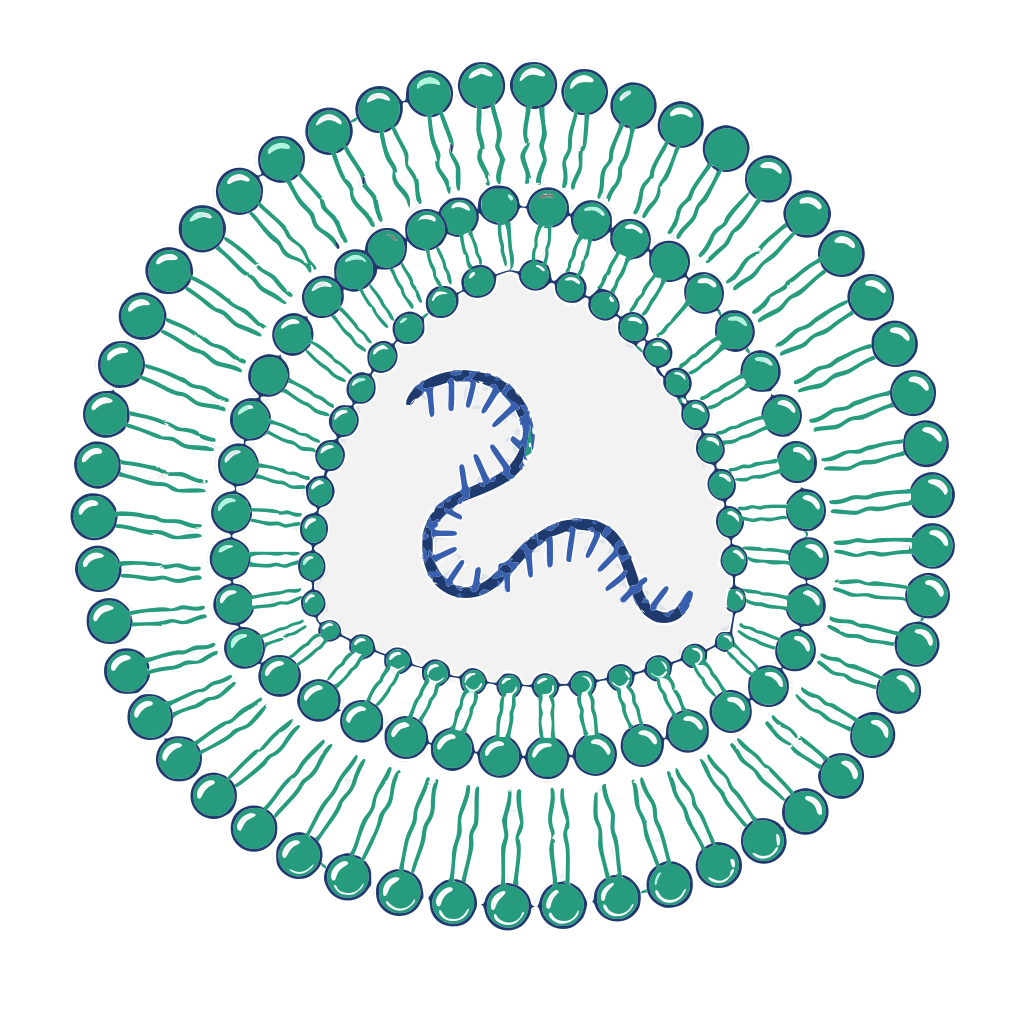
Microfluidic encapsulation, ultrafiltration and sterile filtration — 80–100 nm particles at >95% encapsulation
Capillary electrophoresis, digestion mapping, dynamic light scattering and encapsulation assay — all four indicators must pass
Template construction takes 5–7 working days, IVT synthesis and purification 5–7, and LNP encapsulation with formulation 3–5 — roughly 13–19 working days in total, with QC release provided per batch.
mRNA antigens are translated in vivo and folded by the cell itself, reproducing the native conformation precisely — and suiting programmes that need a fast turnaround. Acceptance spans mRNA integrity ≥80%, capping >90% and dsRNA residue <1%, plus LNP size 80–100 nm, PDI <0.2 and encapsulation >95%.
Deliverables, acceptance criteria and timelines by experimental stage. The staging differs from the process above: the process shows how a project runs, while this table is the acceptance basis written into the contract.
| Stage | Scope | Deliverables | Standards | Timeline |
|---|---|---|---|---|
| mRNA antigen platform | ||||
| Template construction | Codon optimisation, UTR design and linearised plasmid preparation | Linearised DNA template | Restriction digest confirms complete linearisation with no residual circular plasmid | 5-7 business days |
| IVT synthesis & purification | In vitro transcription, Cap1 capping, enzymatic tailing and magnetic-bead or LCC purification | Purified mRNA | Integrity ≥80%, capping efficiency >90%, residual dsRNA <1% | 5-7 business days |
| LNP encapsulation & formulation | Microfluidic encapsulation, ultrafiltration concentration and sterile filtration | LNP-mRNA lyophilised or frozen liquid formulation | Particle size 80–100 nm, PDI <0.2, encapsulation efficiency >95% | 3-5 business days |
| QC & release | Capillary electrophoresis, restriction mapping, dynamic light scattering and fluorescent-dye encapsulation assay | CoA, particle size distribution and integrity QC report | All four release criteria met | Per batch |
Share the intended application and what you already have in hand. A scientist — not a sales rep — will scope feasibility, suggest the right route and send a quote, usually within one business day.