Antibody Discovery
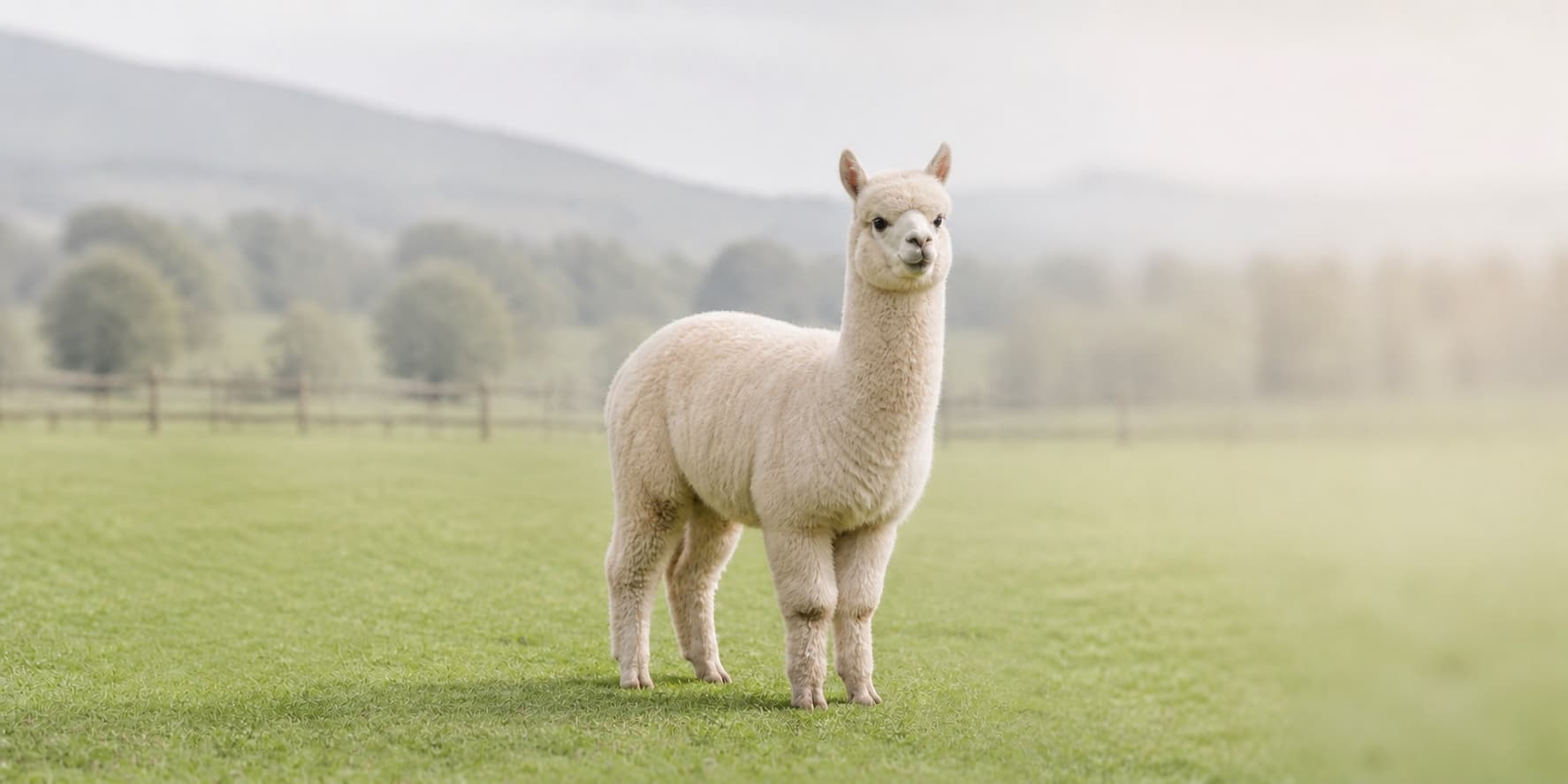
Built on the alpaca's unique heavy-chain-only antibodies, the nanobodies we screen are exceptionally small — combining strong tissue penetration, access to cryptic epitopes, tolerance of extreme conditions, high solubility and easy expression.
SanjingBio specializes in alpaca VHH antibody preparation. On our phage display platform we provide a one-stop service spanning antigen preparation, immunization, library construction, screening, expression and purification through downstream analysis and functional validation — proven on more than 100 targets.
Each project delivers the enriched library, ELISA screening data for ≥20 positive clones, Sanger sequences with sequence analysis, purified antibodies with SDS-PAGE reports, and functional validation data from ELISA and flow cytometry; positive-clone bacterial strains are not routinely delivered. Deliverables, acceptance criteria and timelines by experimental stage are listed in the specifications below.
The antigen can be supplied by you or prepared by SanjingBio; for membrane-protein targets, a stable cell line can be built in parallel for immunization and screening.
Enquire now →

Covering oncology, autoimmune, metabolic and other demanding target classes Anti-CDH17 nanobody case study with raw data shown on this page
Phage display platform, gene to functional validation in one house Timeline and data quality both guaranteed All sequences, purified antibodies and functional validation reports delivered
Library size ≥1×10⁹ CFU, insertion rate ≥95% Positive-clone enrichment ≥20-fold Serum titre ≥1:100,000 (ELISA)
Affinity verified by ELISA and FCM, EC50 ≤10 nM Structure-based rational design with rigorous in vitro and cell-based validation

Eight stages. The antigen and stable cell line can be supplied by you, in which case step 02 is skipped; each stage's outputs and acceptance criteria are in the specifications below.

Antigen format and immunization plan defined from the target's structure; antigen supplied by you or prepared by SanjingBio
Recombinant antigen purity ≥85%; a stable cell line is built in parallel for membrane-protein targets
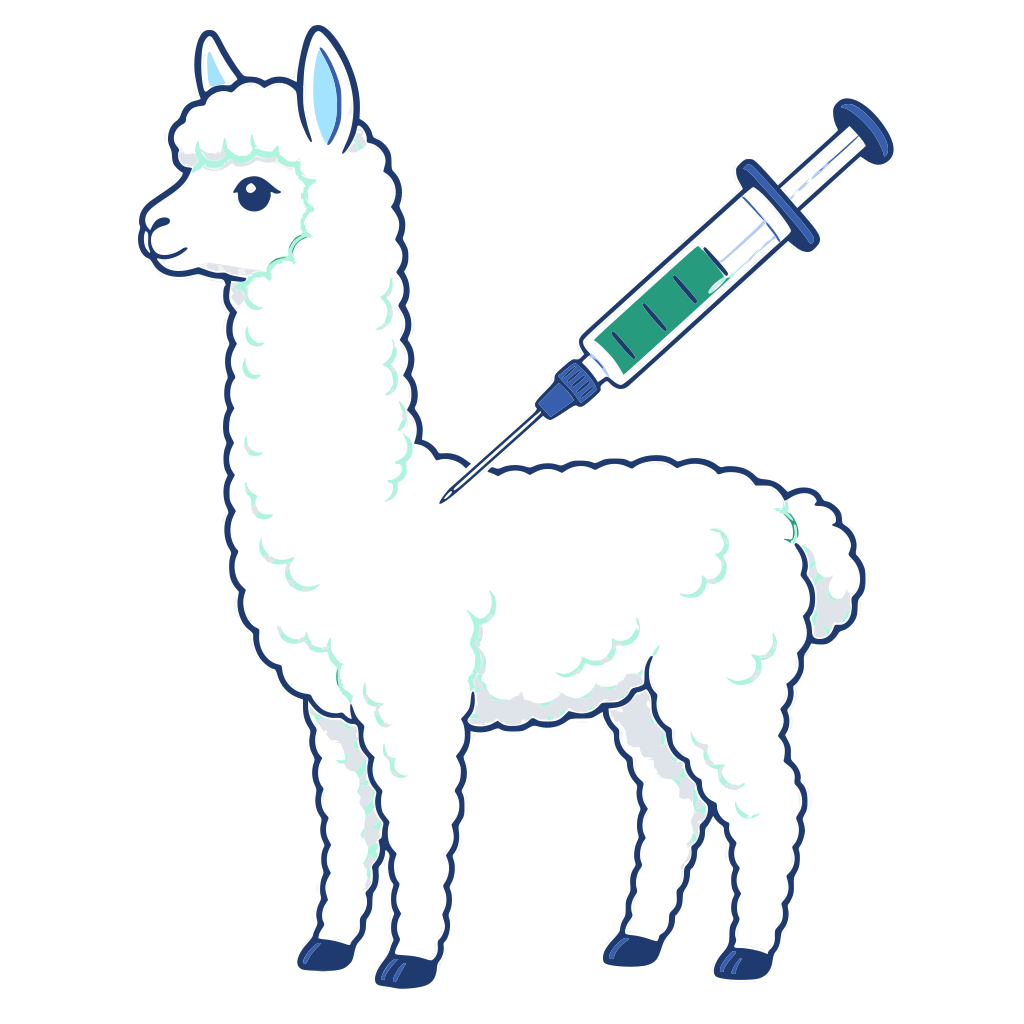
Immunization at our own alpaca facility — 35 days, serum titre ≥1:100,000
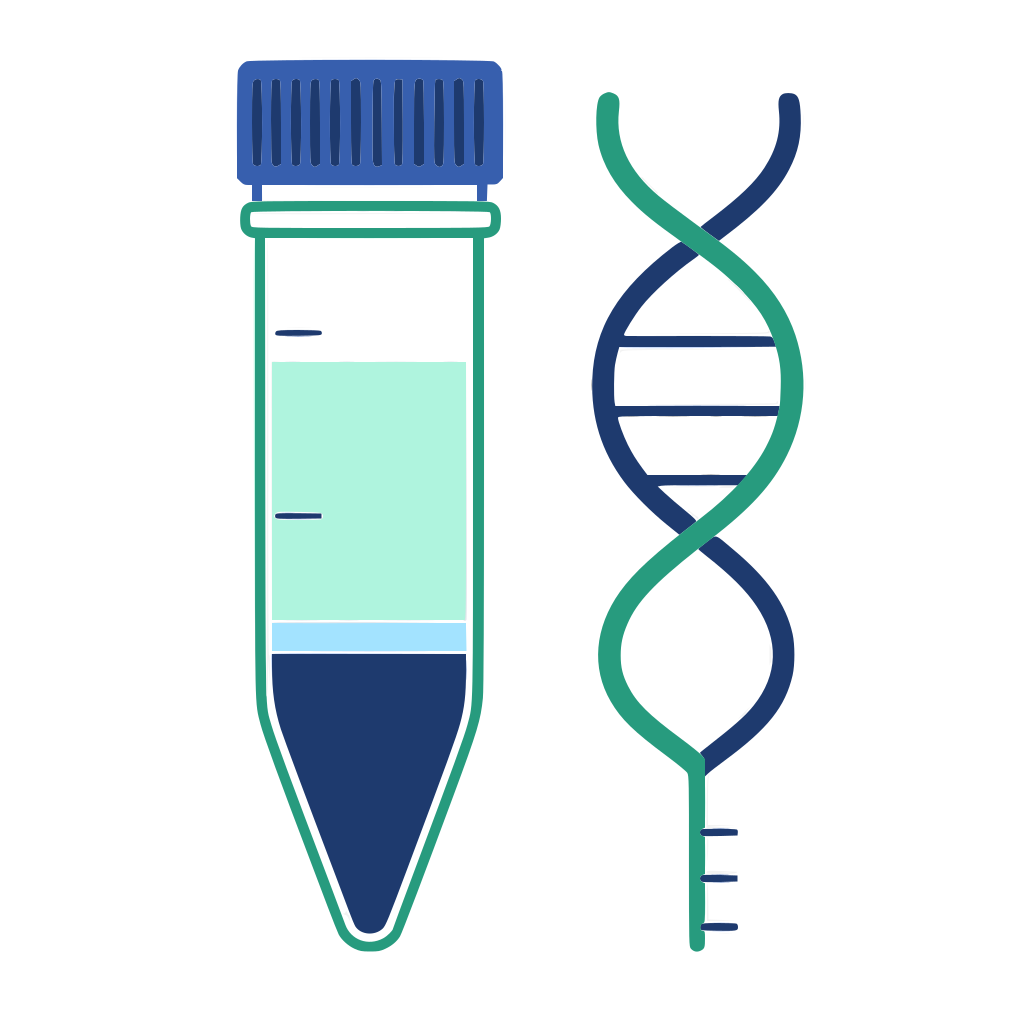
PBMCs are isolated to build a high-quality immune VHH library
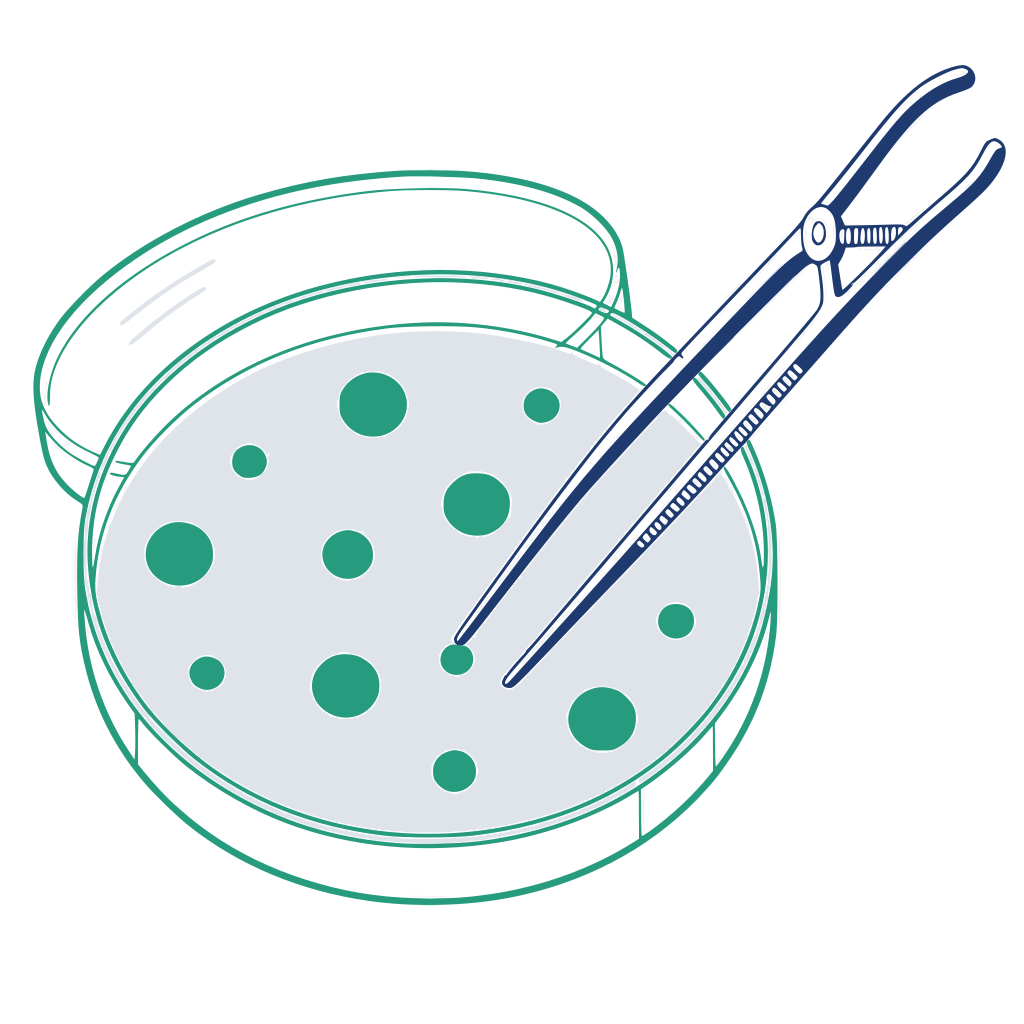
Positive clones panned on the phage display platform, enrichment ≥20-fold
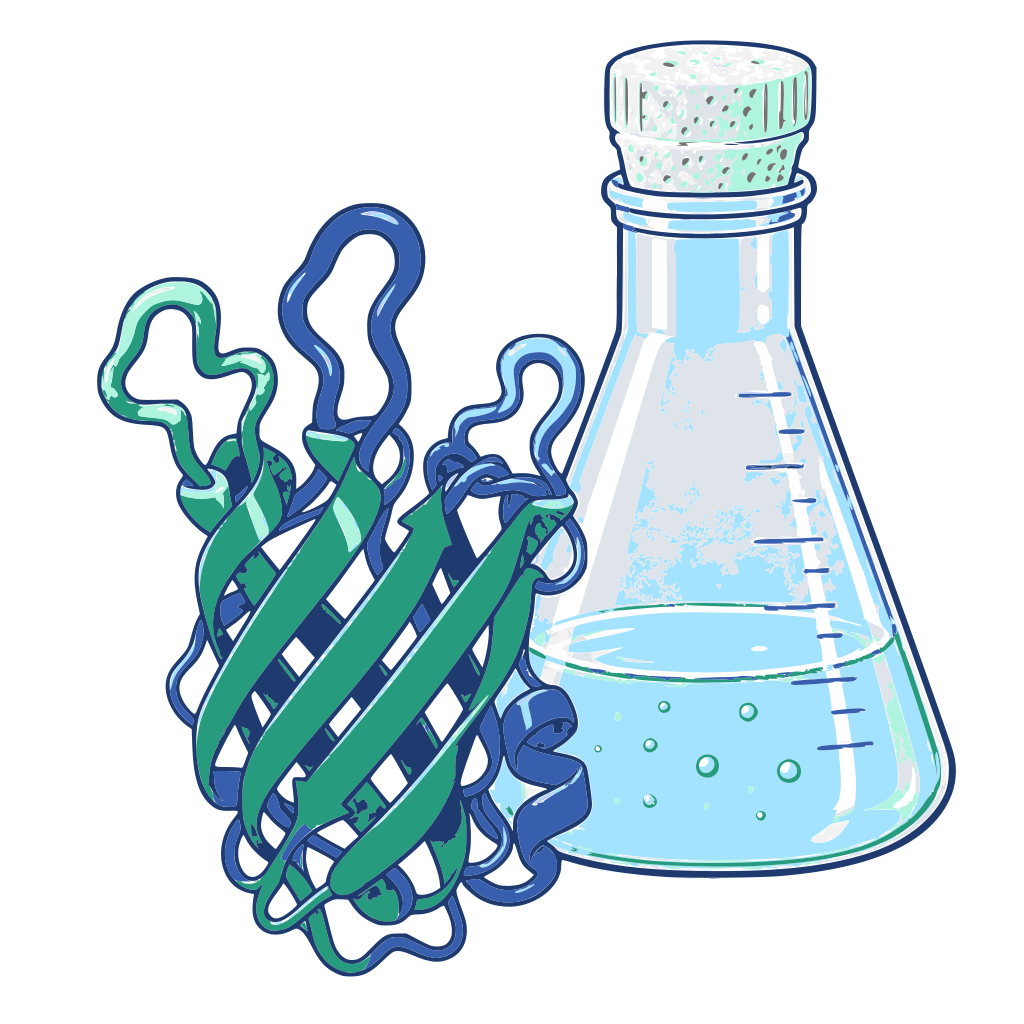
Candidate sequences are recombinantly expressed and purified following ELISA screening of ≥20 positive clones

Affinity and function verified by ELISA and flow cytometry, EC50 ≤10 nM
Purified antibodies, sequencing reports, immunization records and all raw data delivered
Screening and delivery stages total roughly 20–22 weeks (groups two and three below). Commissioned antigen preparation adds 1–6 weeks; stable cell line development adds 4–8 weeks.
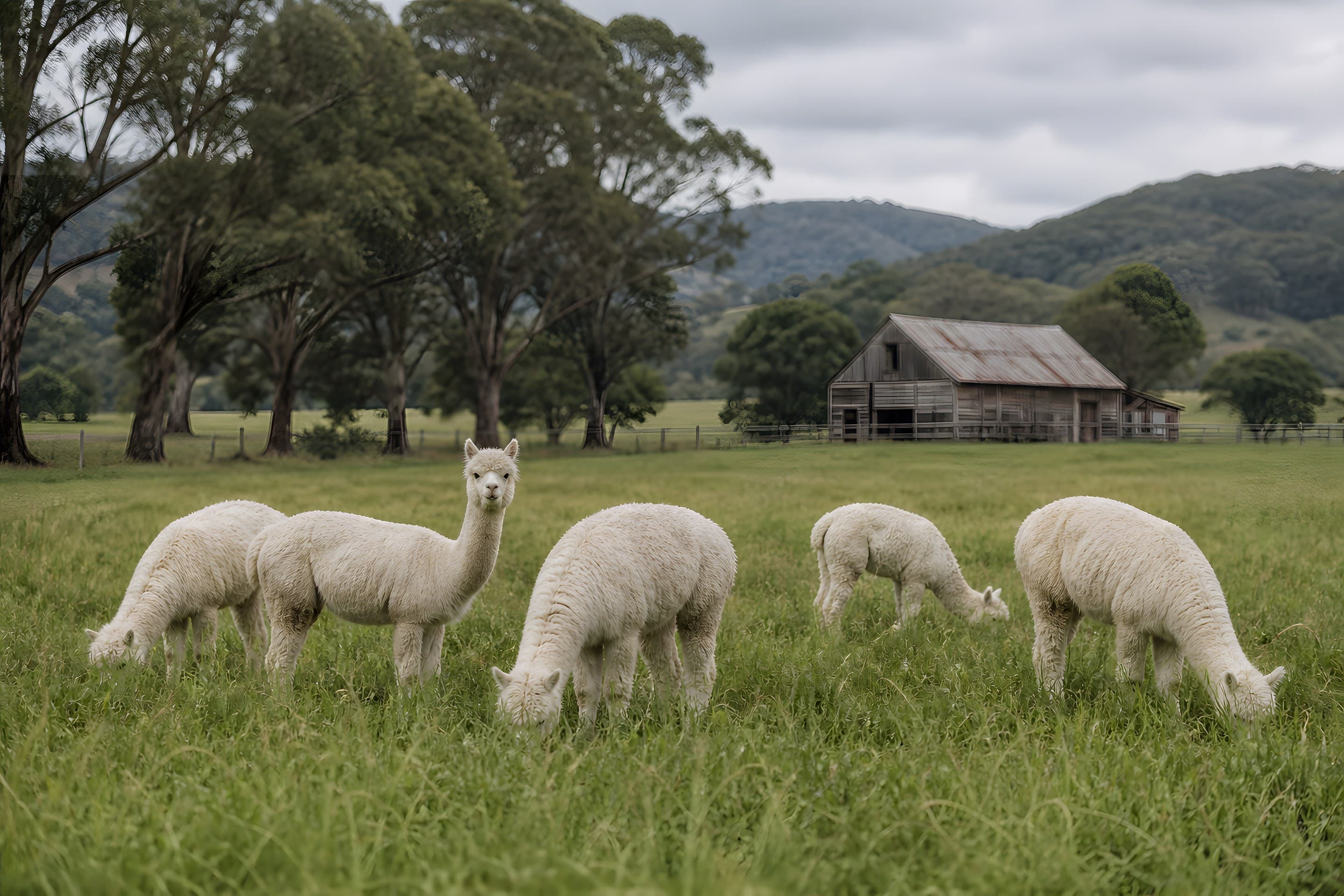
Alpaca immunization, VHH library construction, phage panning and recombinant expression all happen on one platform. Imported zero-background alpacas serve new targets, previously immunized animals can be reused directly, and the immunization stage can be commissioned on its own.
Deliverables, acceptance criteria and timelines by experimental stage, grouped into preparation, discovery, and expression & validation. These terms are written into the contract before work begins and acceptance follows them. The staging differs from the process above: the process shows how a project runs, while this table is the acceptance basis written into the contract.
| Stage | Scope | Deliverables | Standards | Timeline |
|---|---|---|---|---|
| PreparationSkipped if you supply the antigen or cell line | ||||
| Antigen preparation | Design, synthesis and expression | Remaining antigen | Purity ≥85%, concentration ≥1 mg/mL | 1–6 weeks |
| Stable cell line development | Development of a cell line stably expressing the target protein | Stable cell line with expression report | Positive expression report for the cell line | 4–8 weeks |
| Discovery16 weeks total | ||||
| Alpaca immunization | Repeat immunizations with titre testing | Immunization records | Serum titre ≥1:100,000 (ELISA) | 7 weeks |
| Library construction & screening | VHH library construction and screening | Enriched library | Library size ≥1×10⁹ CFU; insertion rate ≥95%; positive-clone enrichment ≥20-fold | 7 weeks |
| Monoclonal identification | ELISA screening | ELISA screening data for ≥20 positive clones | Positive rate ≥30% | 1 week |
| Sequencing & analysis | Sanger sequencing | ≥20 sequencing reports (FASTA) with sequence analysis | All sequences delivered with CDR and germline analysis | 1 week |
| Expression & validation4–6 weeks total | ||||
| Recombinant expression | Expression and purification | Purified antibody (1 mg per clone) with SDS-PAGE report | Purity ≥95%, concentration ≥1 mg/mL | 2–4 weeks |
| Functional validation | Affinity verified by ELISA and FCM | Detailed functional validation data report | EC50 ≤10 nM | 2 weeks |
“Remaining antigen” means the surplus beyond immunization use, delivered with the project. All raw experimental data and reports are provided at delivery.
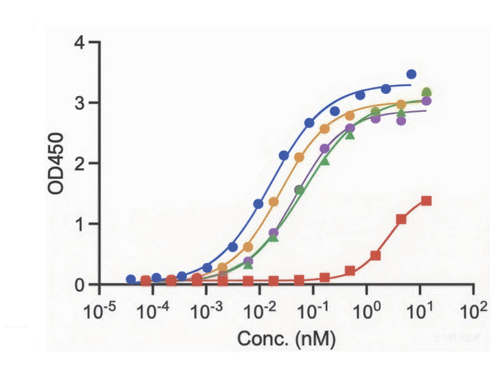
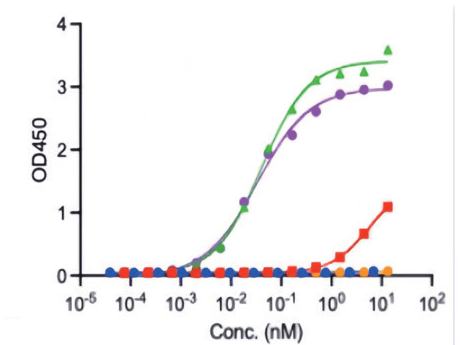
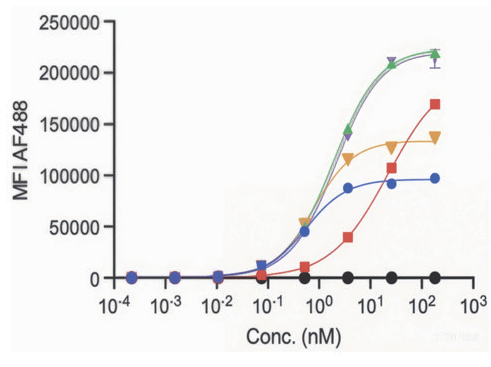
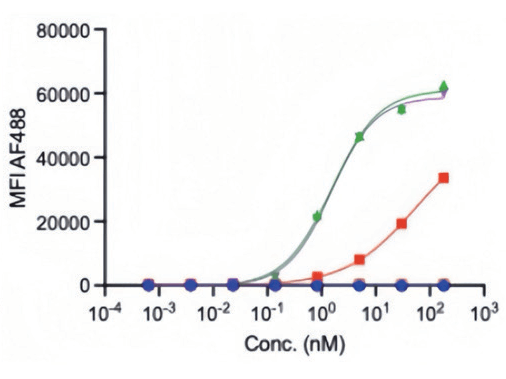
Multiple anti-CDH17 nanobodies bind at nanomolar (nM) level and cross-react between human and cynomolgus antigen
X-axis: antibody concentration (nM, log scale). Y-axis: OD450 for ELISA, mean AF488 fluorescence intensity for flow cytometry.
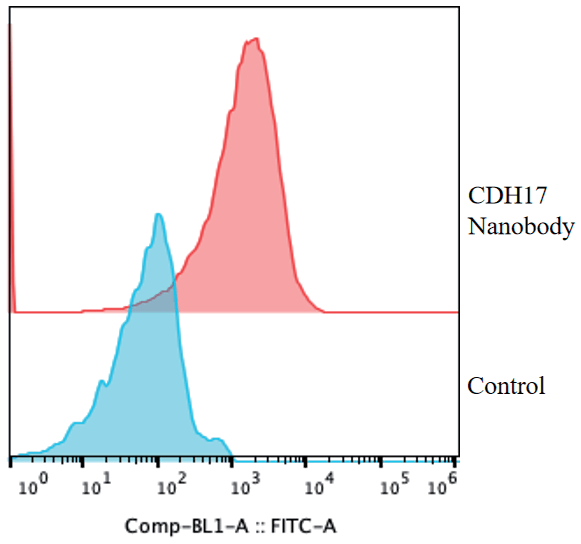
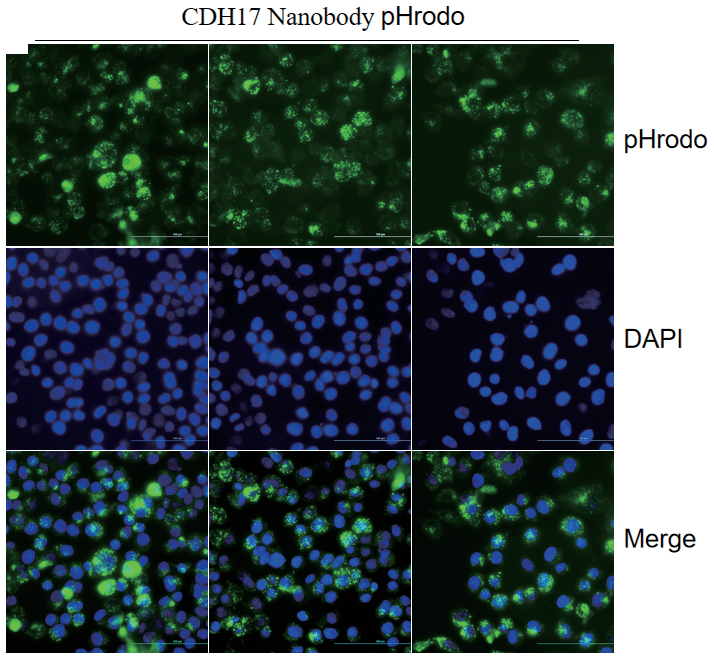
The pHrodo assay shows the candidate nanobodies are internalised by CDH17-positive cells
In flow cytometry the nanobody group (red) shifts about one order of magnitude above the control (blue); in imaging, the pHrodo signal (green) overlaid with DAPI nuclear stain (blue) shows antibody entering acidic vesicles by internalisation.
Share the intended application and what you already have in hand. A scientist — not a sales rep — will scope feasibility, suggest the right route and send a quote, usually within one business day.