Antibody Production
Fusing murine variable regions to human constant regions lowers immunogenicity while retaining the parent antibody's high affinity.
A chimeric antibody is one whose constant regions have been swapped for those of another species by protein engineering.
The classic application converts a murine antibody into a human–mouse chimera: the parent's variable regions — and therefore its binding specificity — are retained while human constant regions are introduced.
Drawing on deep experience, SanjingBio has built a mature, efficient multi-species chimeric platform covering human, mouse, rabbit, rat and dog, providing custom development and production that meets a wide range of research needs precisely.
Enquire now →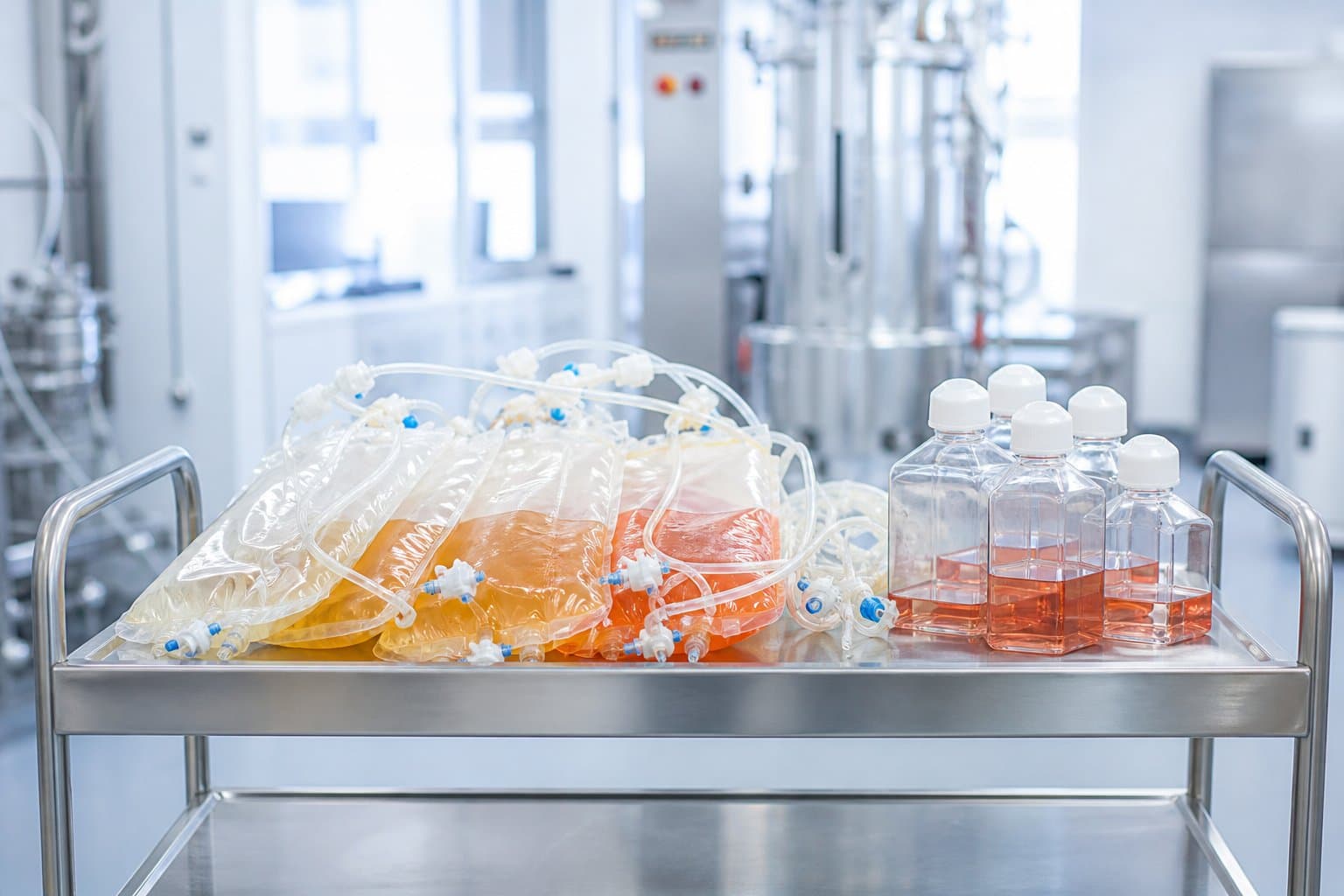

Deeply optimised HEK293 and CHO systems deliver near-native glycosylation and post-translational modification, keeping antibody structure and function close to the natural state.
Variable regions are supported from many species — human, mouse, rat, dog, rhesus monkey, chicken, rabbit and camel — giving antibody programmes a solid starting point for any target.
Constant regions are available from human, mouse, rat, dog, rhesus monkey and rabbit, with proven experience across IgG, IgA, IgM and IgE isotypes to meet potency, half-life and other functional requirements precisely.
We integrate these platforms and options efficiently, drawing on proven experience to tailor the optimal antibody construction and production plan and speed the path from development to application.

Six stages. Supplying the parent variable-region sequence is enough to start; outputs and acceptance criteria are in the specifications below.
Variable and constant regions are joined, synthesized and sequence-verified

Chimeric antibody genes are cloned into mammalian expression vectors and sequence-verified
Transient HEK293/CHO expression with near-native glycosylation and modification
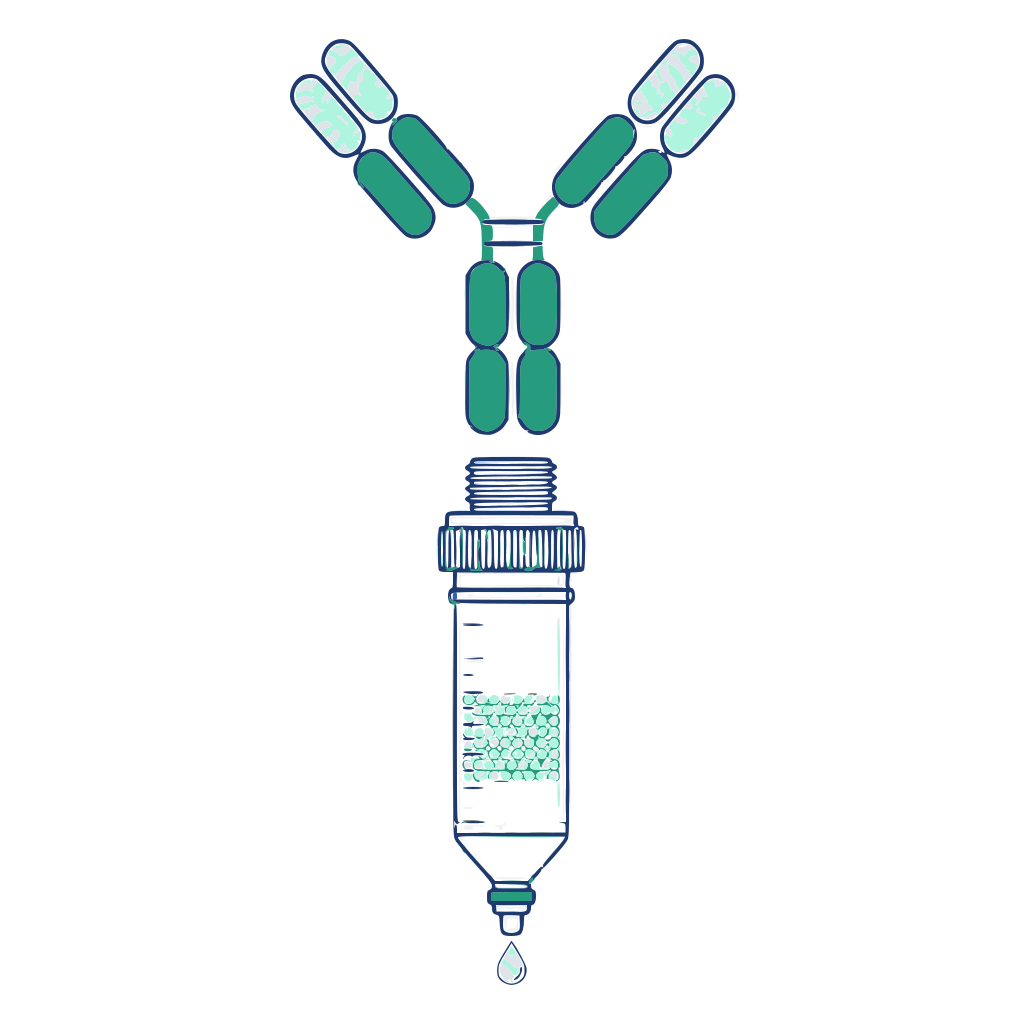
Affinity chromatography to ≥95% purity

Structural integrity and purity confirmed by R/NR SDS-PAGE
Purified antibody sample and sequencing report delivered
Gene synthesis through purified delivery totals roughly 5–7 weeks; the chimeric platform covers human, mouse, rabbit, rat, dog and other common species.
Variable regions come from human, mouse, rat, dog, rhesus monkey, chicken, rabbit or camel; constant regions cover human, mouse, rat, dog, rhesus monkey and rabbit, with proven IgG, IgA, IgM and IgE isotype experience to hit potency and half-life requirements precisely.
Deliverables, acceptance criteria and timelines by experimental stage. The staging differs from the process above: the process shows how a project runs, while this table is the acceptance basis written into the contract.
| Stage | Scope | Deliverables | Standards | Timeline |
|---|---|---|---|---|
| Gene synthesis & cloning | Sequence synthesis and vector construction | Sequencing report | Sequence verified | 2–3 weeks |
| Large-scale recombinant antibody expression | Transient expression and purification | Purified antibody sample | Purity ≥95% | 3–4 weeks |
From the customer's murine variable-region sequence, a chimeric construct with human IgG1 constant regions was built, transiently expressed in HEK293 cells and purified, then characterised by reducing/non-reducing SDS-PAGE for structure and purity.
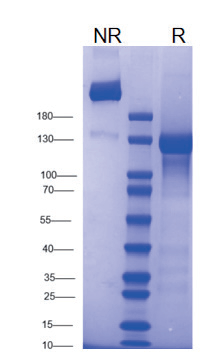
SDS-PAGE — the chimeric antibody is structurally intact, with bands under both reducing and non-reducing conditions matching theoretical molecular weights, purity >95%, and no impurity bands or degradation.
Share the intended application and what you already have in hand. A scientist — not a sales rep — will scope feasibility, suggest the right route and send a quote, usually within one business day.