Antibody Drug Evaluation & Testing
Label-free, real-time biomolecular interaction analysis that measures binding affinity (KD) and kinetics (kon, koff) quickly and accurately.
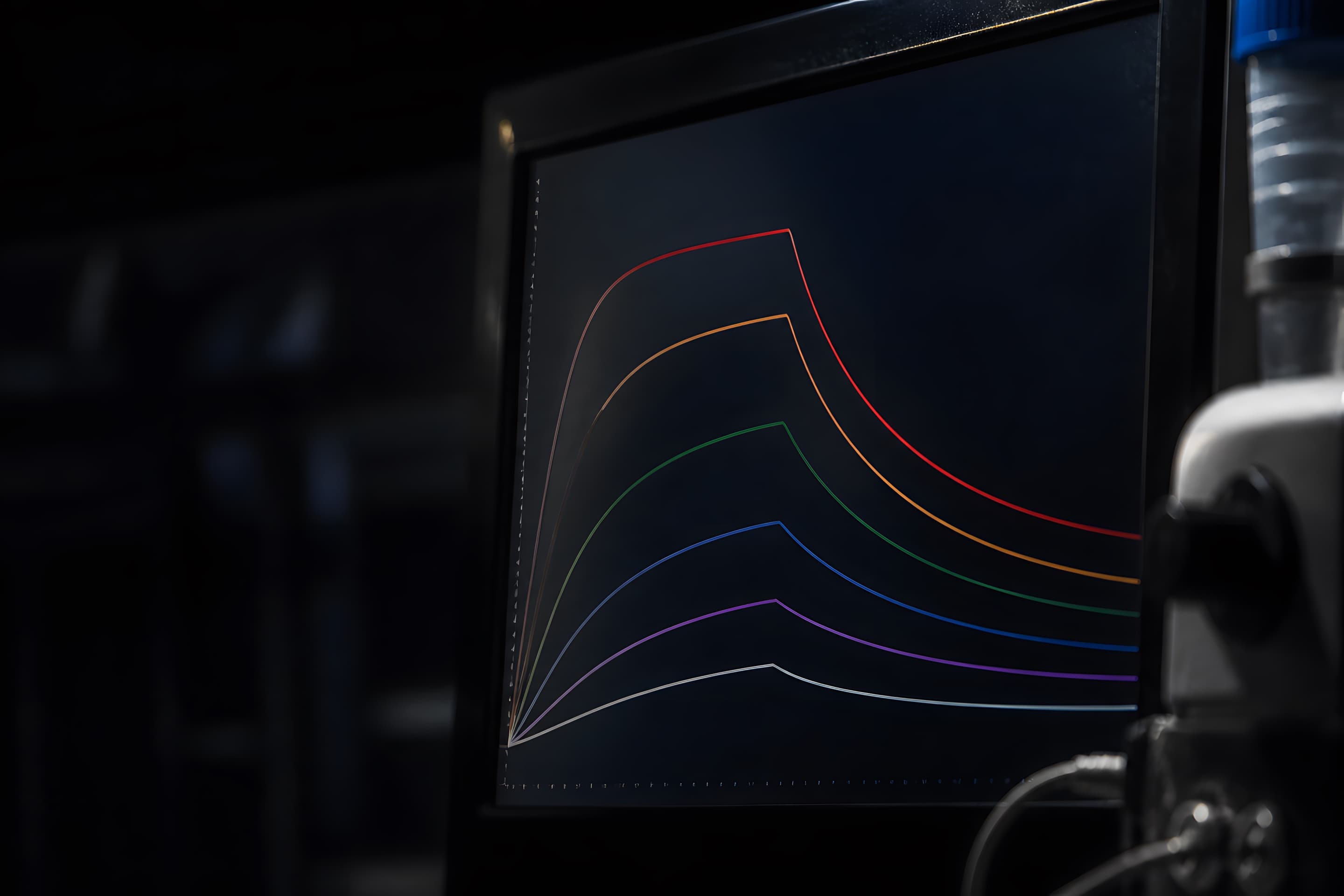
Built on biolayer interferometry (BLI), the service analyses biomolecular interactions in real time without fluorescent or radioactive labels.
It measures binding affinity (KD) and kinetics (kon, koff) between antibodies, proteins, peptides and nucleic acids quickly and accurately — the ideal tool for antibody screening, epitope mapping and lead optimisation.
The platform is highly stable with excellent reproducibility, simple to run and sparing of sample, and supports high-throughput screening — with study design and data analysis support and short turnaround.
Enquire now →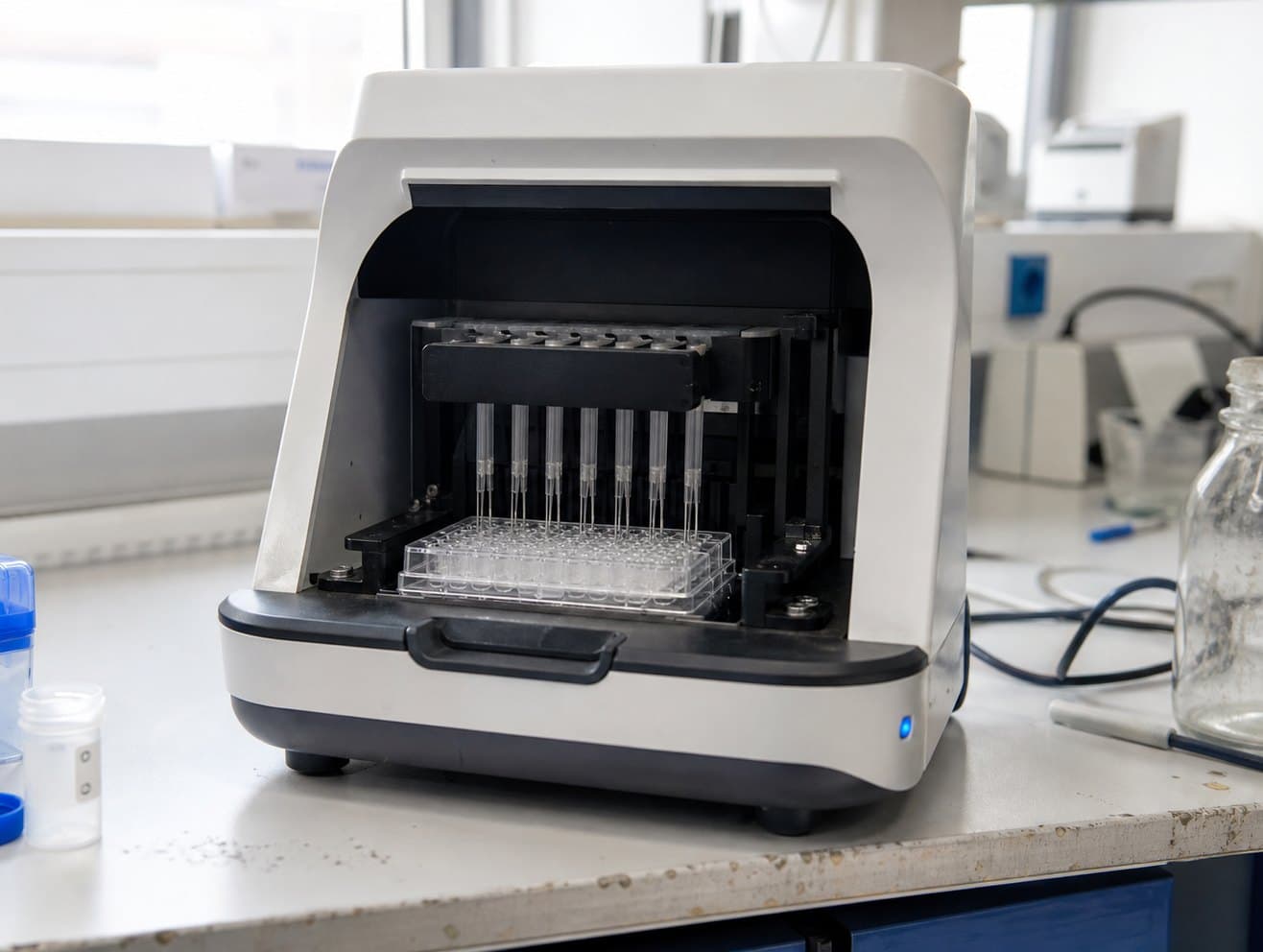

A highly stable platform with excellent reproducibility keeps results trustworthy.
Experienced staff support study design and data analysis on short delivery cycles.
Simple operation with low sample consumption supports high-throughput screening.
Professional reports with interpretation of the key parameters speed up decisions.

Five stages. Biolayer interferometry (BLI) is simple to run, consumes little sample and supports high-throughput screening; outputs and acceptance criteria are in the specifications below.

Molecular properties are assessed and the immobilisation strategy and concentration series designed
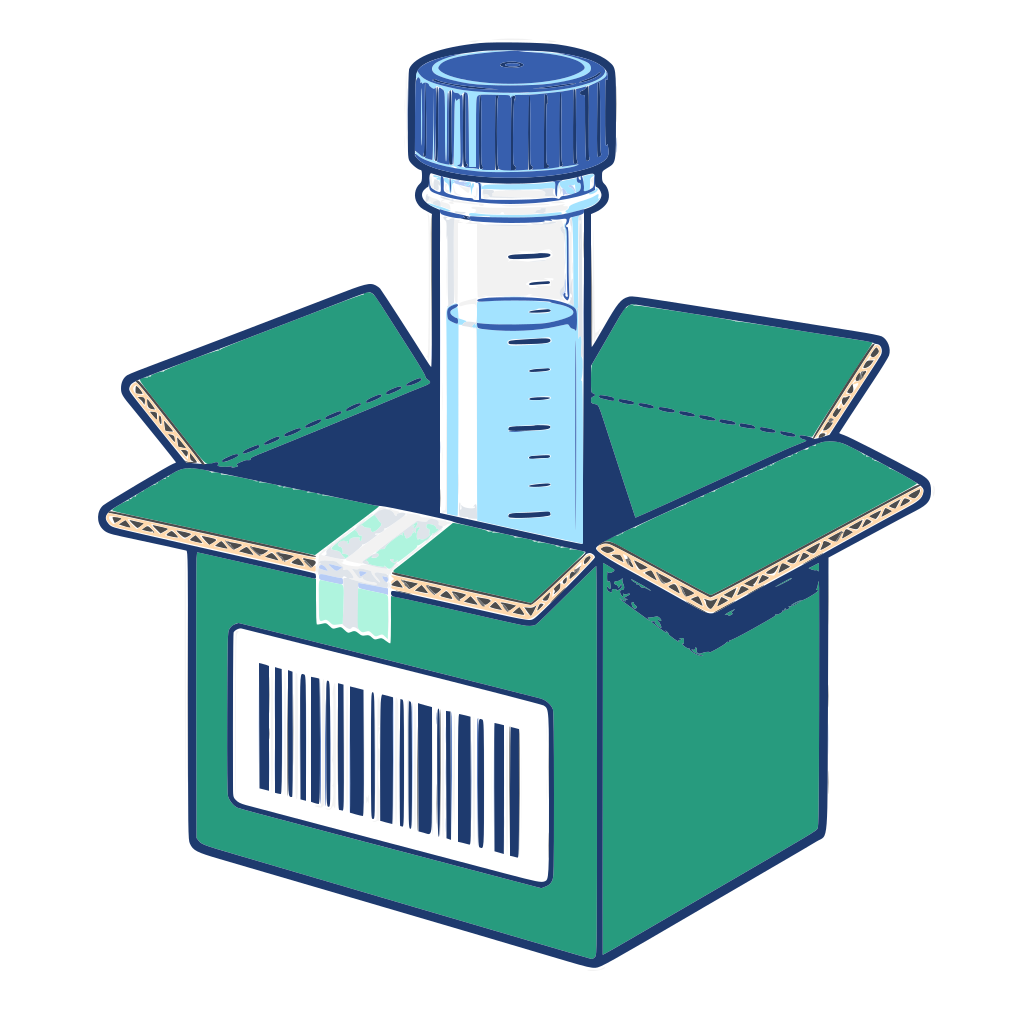
Sample concentration and purity are verified against BLI requirements
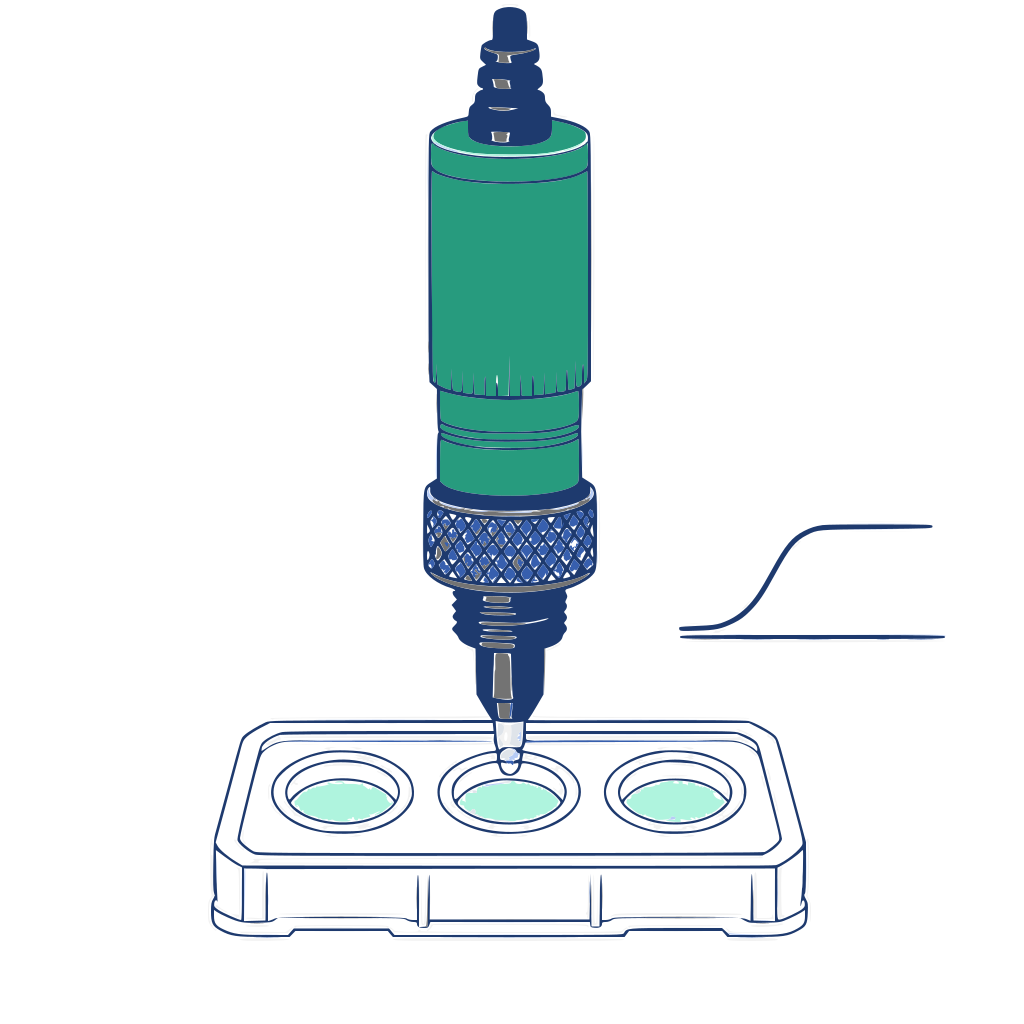
Sensor conditioning, ligand immobilisation, association and dissociation runs with real-time trace capture

Curve fitting and model analysis in dedicated software yield affinity and kinetic parameters
The standard report is delivered, with optional interpretation, cross-comparison and recommendations
Design and sample assessment 1–2, measurement and acquisition 1–2, analysis and reporting 1, and optional in-depth interpretation 1–3 — roughly 4–8 working days. Note: samples must be free of high-concentration polymers such as PEG, and ligand solutions for amine coupling must not contain tris, NaN₃ or glycine.
BLI analyses interactions in real time without fluorescent or radioactive labels, measuring affinity and kinetics between antibodies, proteins, peptides and nucleic acids. The platform is highly stable with excellent reproducibility, simple to run, sparing of sample and suited to high-throughput screening.
Deliverables, acceptance criteria and timelines by experimental stage (source omits the time unit). The staging differs from the process above: the process shows how a project runs, while this table is the acceptance basis written into the contract.
| Stage | Scope | Deliverables | Standards | Timeline |
|---|---|---|---|---|
| Study design & sample assessment | Molecular properties are assessed against your objectives to design the assay — immobilisation strategy, concentration series and so on — and supplied samples are checked for concentration and purity. | 1. Detailed study protocol 2. Sample test report (optional) | The plan is sound and workable, confirmed by both sides | 1-2 |
| Instrument run & data acquisition | Biosensor preconditioning, sample immobilisation and association/dissociation runs follow the agreed protocol, with raw sensorgrams captured in real time. | 1. Raw data files 2. Raw sensorgram plots | High signal-to-noise sensorgrams with complete, clear association and dissociation phases | 1-3 |
| Data analysis & reporting | Data are processed, fitted and modelled in dedicated software such as FortéBio Data Analysis to calculate affinity and kinetic parameters. | Standard report covering: 1. Methods and conditions 2. Fitted sensorgrams 3. Key parameters (KD, kon, koff, R², etc.) 4. Preliminary conclusions | Goodness of fit R² > 0.98 (ideal) or a reasoned explanation, with confidence intervals stated | 1-2 |
| In-depth interpretation & support | (Optional) Parameter interpretation, cross-comparison of results and recommended conclusions, to your requirements. | 1. Expert interpretation 2. Recommendations for follow-up work | Interpretation fits the project context and recommendations are actionable | 1 |
BLI resolved the binding characteristics between the target proteins precisely, giving a solid experimental basis for mechanism studies and drug development.
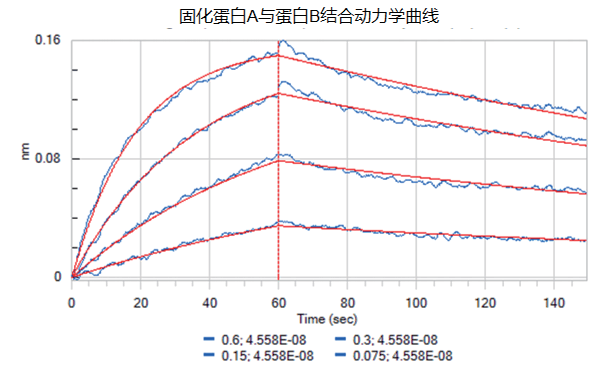
Kinetic model fitting gives KD = 4.56×10⁻⁸ M (nanomolar) with R² = 0.9966 — stable, high-strength binding.
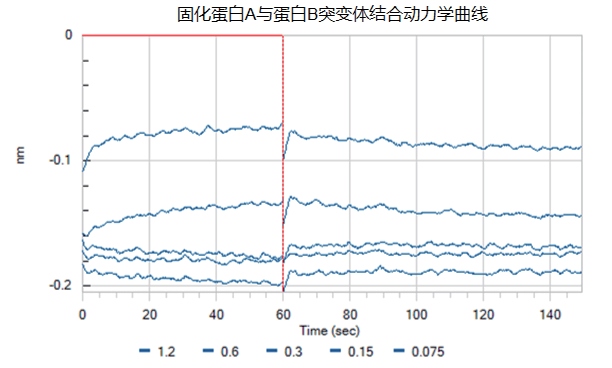
The protein B mutant shows no appreciable binding at any concentration tested, matching the blank control — mutating the key residues abolishes binding entirely.
Share the intended application and what you already have in hand. A scientist — not a sales rep — will scope feasibility, suggest the right route and send a quote, usually within one business day.